Wyn's WW2


%20%20is%20on%20the%20left_.jpg)


Stories and memories
At the outbreak of war...
"I had a small stable of thoroughbred engineering businesses on the go but when the UK declared war on Germany on 3 September 1939, the first thing I did was offer my services to the RAF. Having been with IAL as Chief Mechanical Engineer and run all their overhaul depots and maintenance, I naturally thought I would be of considerable use to them. I probably knew as much about servicing and overhauling aircraft and engines as anyone. The reply I got back shook me to the core. I received a ‘thanks, but no thanks’ as I had never been officially apprenticed! That settled me as far as joining up was concerned and as Crolls was growing, it needed more of my attention anyway, so I decided to actively drive the business myself.
War time friends
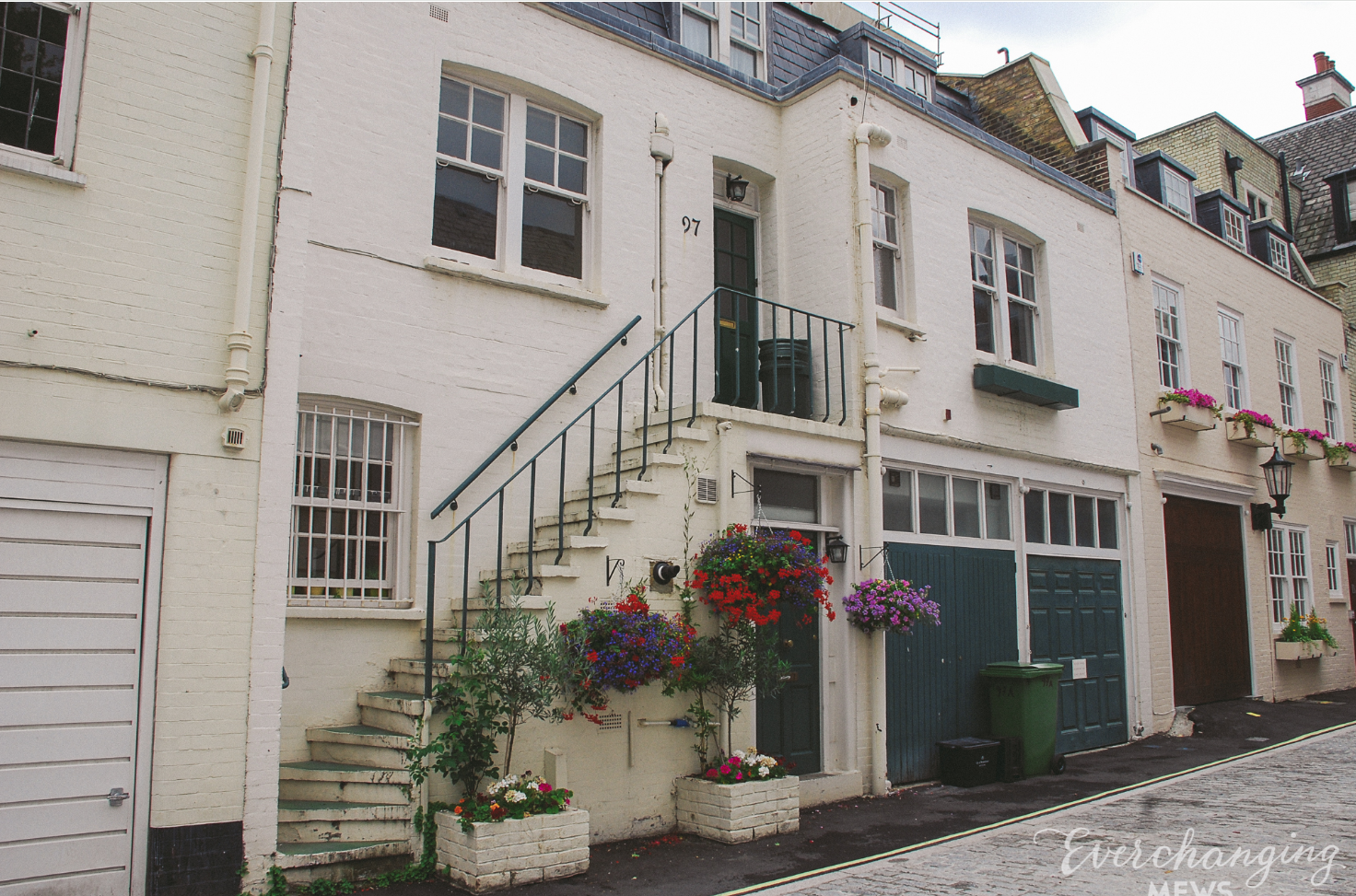
"I had previously taken on an upstairs flat in one of the delightful Devonshire Mews South cottages (number 101) which had a couple of bedrooms, an outside staircase and a four-car garage under it. It was very desirable, and I dare not think of the price it would fetch today. It had been rented out by Mother as manager while I was living elsewhere, and she was wont to complain bitterly that my tenant was always late with the rent. “Once when I went round to see about it the door was opened by a female who had painted toenails!” she gasped when regaling me with her story of horror. So affronted was she that she insisted the tenant quit the place immediately and I was sent round to dispatch the miscreant. And who should open the door but my old friend Clifford! We laughed heartily and rekindled our friendship on the spot. It was that very evening while we were out celebrating that he introduced me to the delicious Coyt Barry, a photographer’s model and catwalk mannequin living nearby in Lowndes Street, Knightsbridge. She was 17 years my junior and we got on swimmingly, so much so that as things became tougher and more dangerous in town, she moved out soon after I did and lived with me for most of the war."
Escape
Wyn: "At the end of 1939 and being far-sighted (as I thought at the time) I bought a 1000cc 4 Square Ariel and a Fiat 500 Topolino (‘little mouse’ in Italian) which was the smallest car they produced. I secured the last one available in England. With these I figured I’d be able to get out of London easily if it was in
ruins.
It soon became obvious London living might be too much of a gamble and moving to the country for the duration would be more comfortable. I told Hatt to find me a cottage not too far from the Totton Works and he promptly uncovered one called Tarrants Farm in Maury’s Lane, West Wellow which I leased right at the end of 1939. It was a charming little cottage next to the local bakery and had a large barn and some land. It had no water or electricity, and the well was in the living room! Between us, Hatt and I soon had it fixed up with power and water from a tap. I can’t remember what we did for a bathroom, but I suppose there was something which served the purpose. It was a temporary port in the storm so not something I dwelt upon.
Sybil had divorced John Scott in the late 1920s and married a chap called Johnnie Epworth Hubbard Gelston in July 1932 at St Martin’s in London. A former Captain in the 16th (Queens) Lancers during the Great War and then in the Indian Army until 1922, he was a charming, delightful Irishman just a couple of months younger than Sybil. The problem was he loved booze as much as he loved his bride. When the war kicked off, Sybil was serving in the ATS and was living back in London, so Johnnie was at a loose end down on the coast having bought an interest in an electrical firm in Brighton (he wasn’t part of the work force though). She asked me to give him a job, and as he was off the drink at the time, I employed him at Crolls on the condition that he’d be fired if he ever drank on my watch.
Johnnie moved up from Brighton to be nearer Crolls, renting a beautiful cottage called Wellow Wood Thatch in Wellow Wood near Romsey. Then as things progressed and went well, he took a house called Fairfield in Calmore which was much nearer the Totton Works. He was a competent secretary and did all the books very well, and he was amusing to have around. He stuck it out for about a year without touching a drop and then one Saturday night he hooked up with a floozy in Southampton’s notorious Polygon Hotel and fell off the wagon as hard as could be. Together they went on a monumental bender. As Fairfield was nearby, it was to there that they retired to bed for six weeks during which time they consumed over 200 bottles of gin, rum etc. helped admittedly by Johnnie’s manservant. I of course sacked him right away.
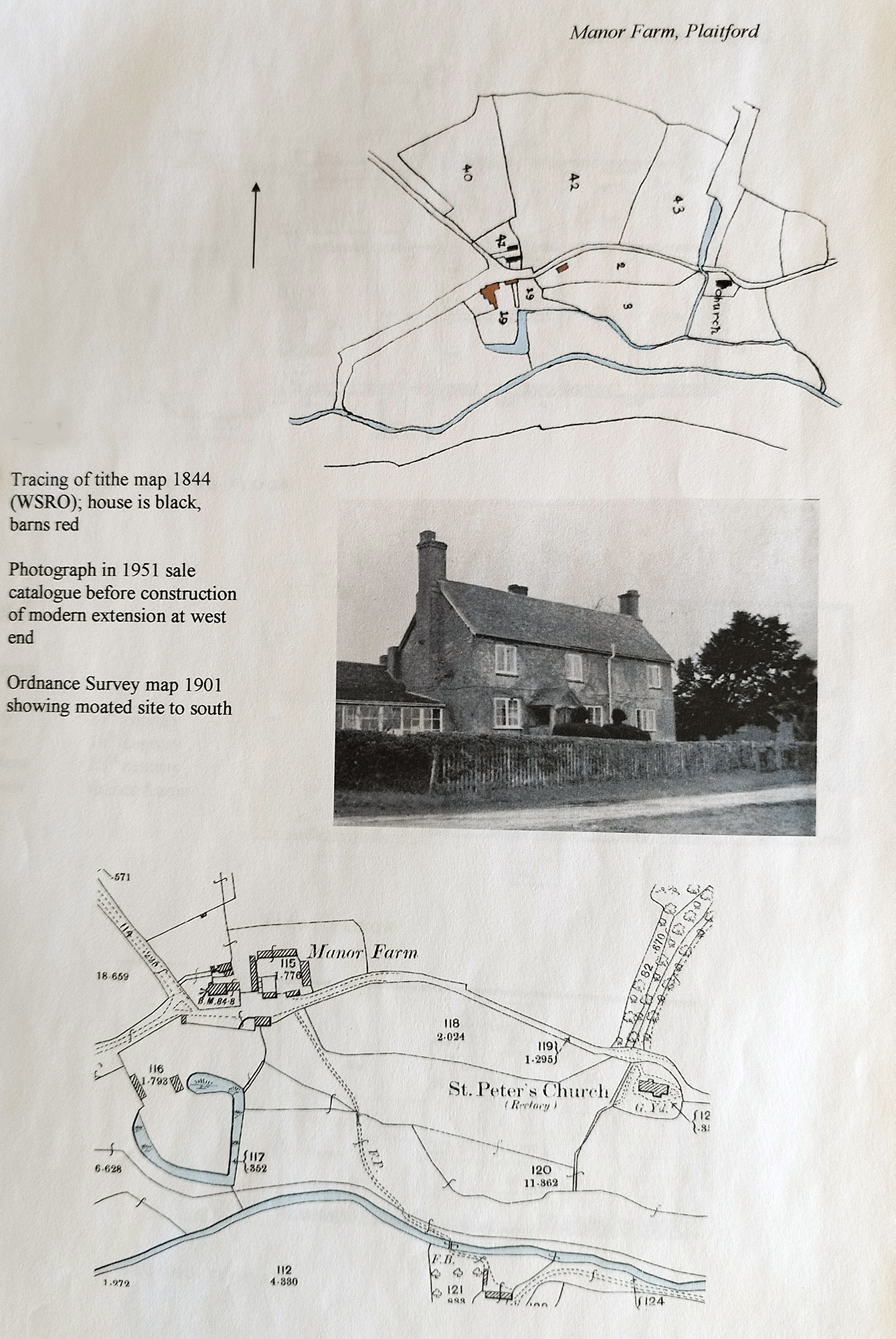
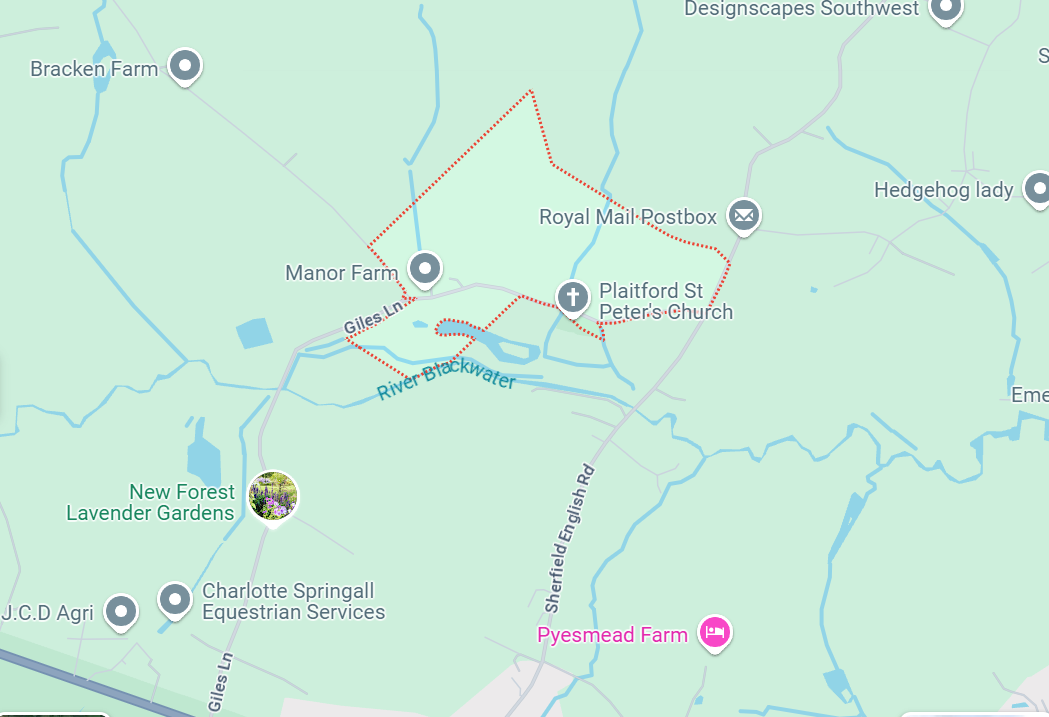
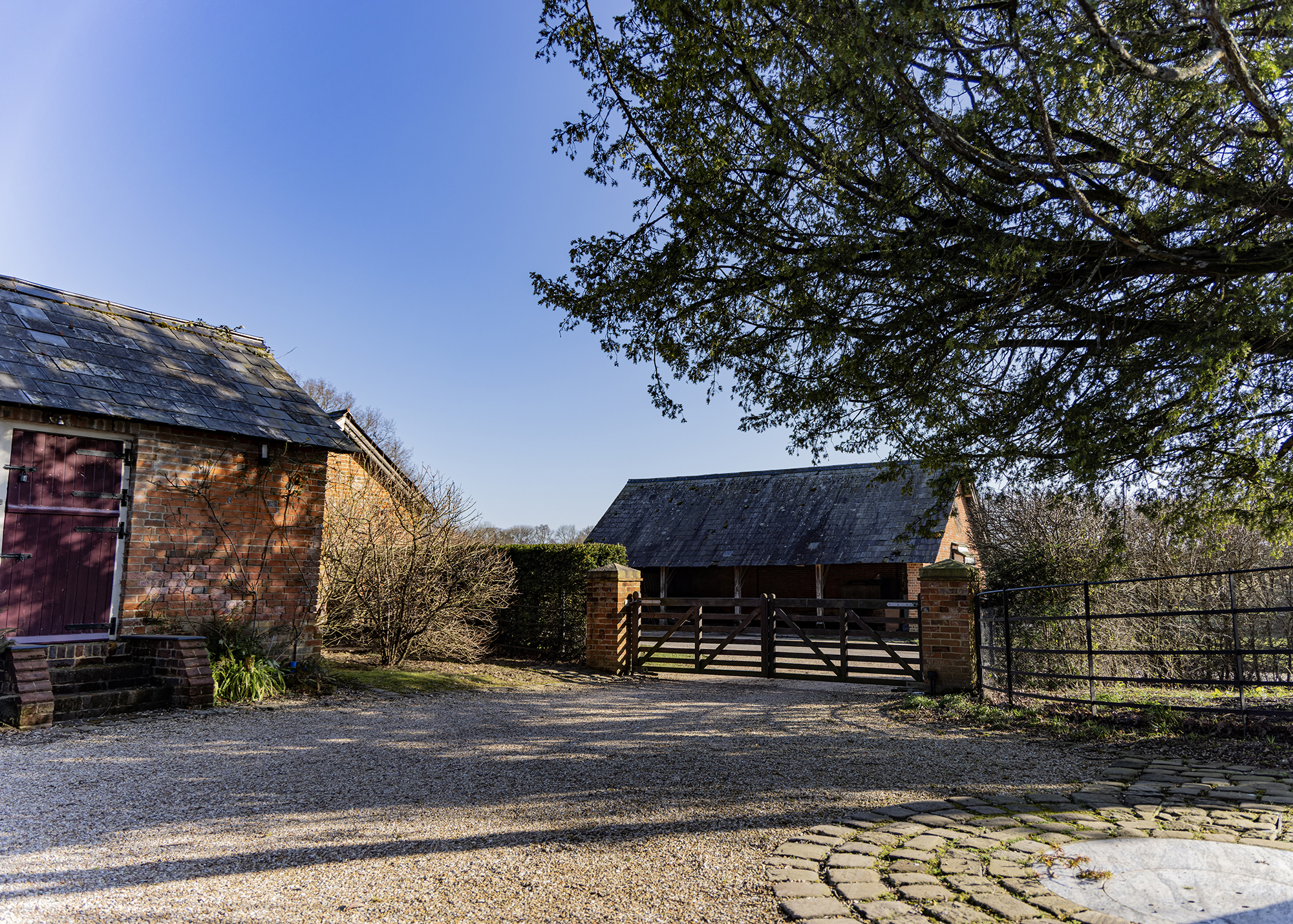
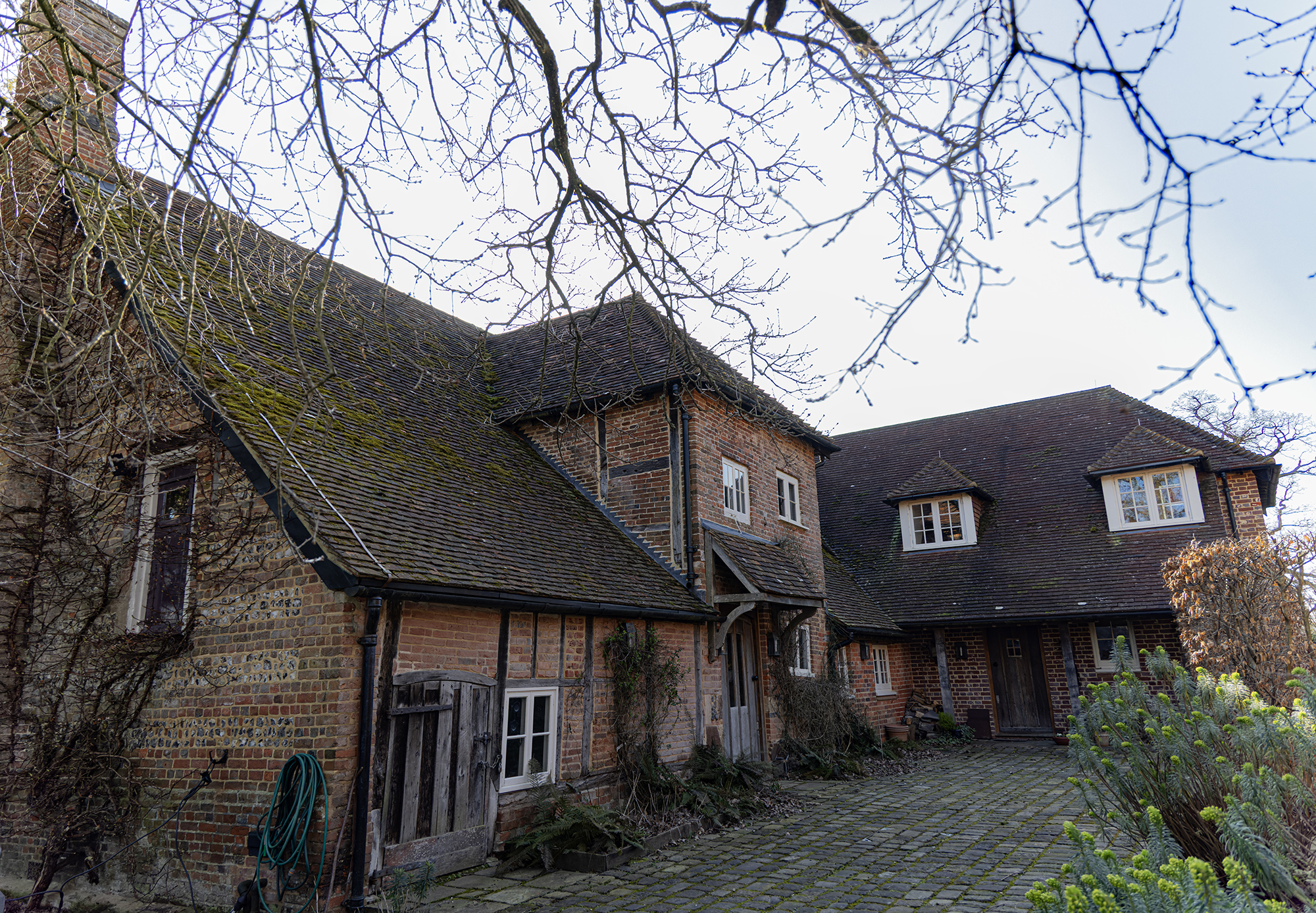
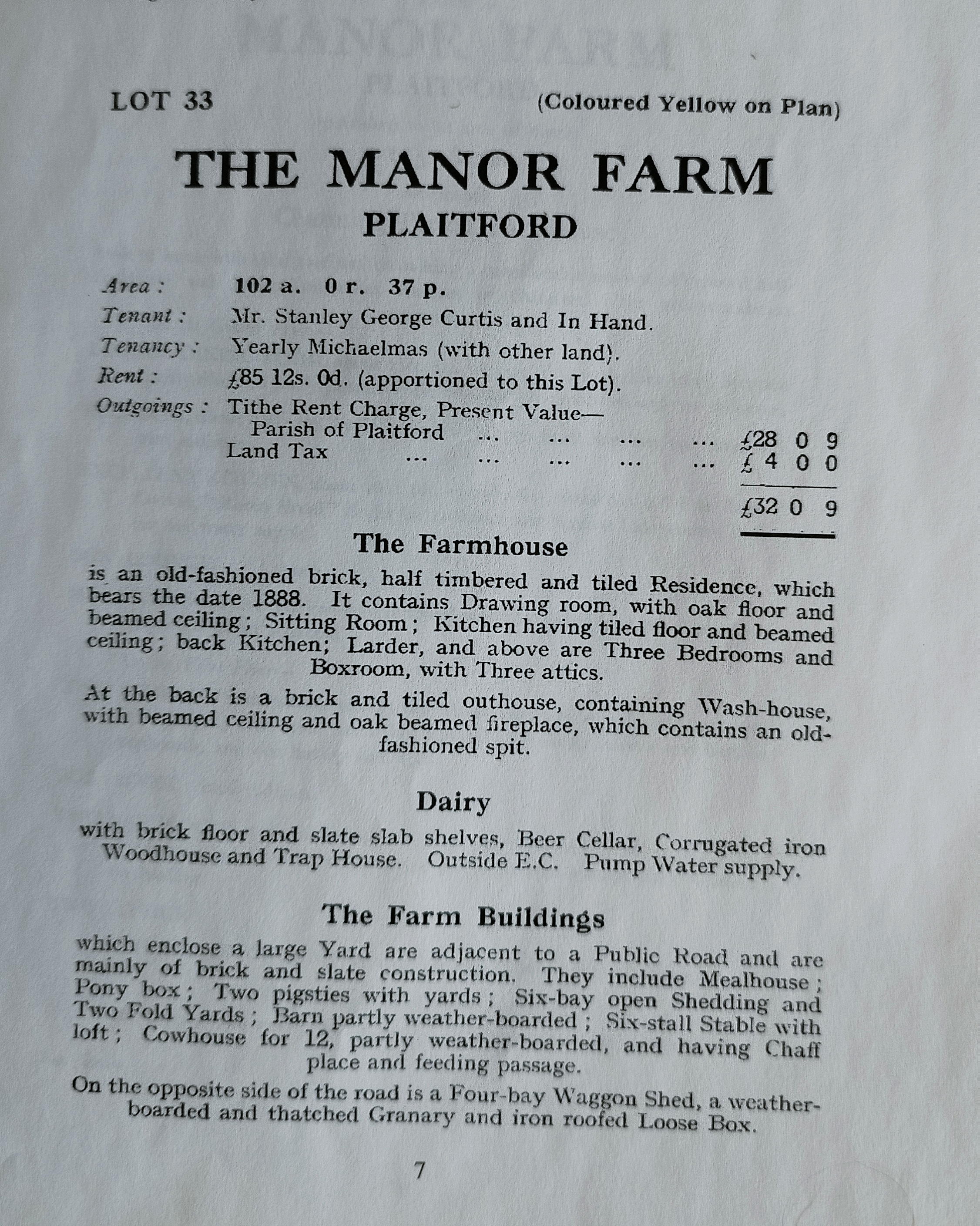
Before Johnnie disgraced himself, his house Wellow Wood Thatch had been around the corner from Tarrants Farm. We were both very keen on shooting, so we decided to rent a shoot. In hunting around to find something suitable to lease, he came upon Manor Farm, Church Lane, Plaitford near Romsey - a very nice little set up of 150 acres of pasture, managed Victorian water meadows and ancient woodland together with a nice late 17th century house, and a very old timbered cottage with two bedrooms. There was also a courtyard of brick farm buildings, a large cart shed, and an 18th century timber-framed grain store set on 12 staddle stones with a thatched roof. The plot was very conducive to a productive small shoot, and it would keep us replete while rationing was going on. I kept up the lease on Tarrants Farm but decamped to live at Manor Farm for all the war, and Coyt was with me for at least four of those years as was the able Hatt. Nigel joined us on and off for months at a time, and when Clifford joined Crolls, he also made himself at home there. When Coyt and I took up residence we started to get the house liveable. Again, there was no heat, running water or electricity. I installed the electric plant, brought water from the stream and installed the central heating. When all was done it was very comfortable."
Bombs
Wyn: "Bombs fell a lot on Southampton but rarely near the Works thank goodness. On the 10 July 1940, the first day of the Battle of Britain, I watched the dog fights over the city and heard later that about 180 German aircraft were brought down. On another night, I saw smoke coming from the direction of my smaller farm so hastened out there to see what was afoot. I arrived in time to see a disabled Messerschmitt bomber coming down to try and land on some common land nearby. It passed at about 30ft above the ground not more than 10 yards away from where I was standing. I saw a terrified face of one of the enemy crew through a window before it crashed and exploded and all four men were killed. After the crash the engines were about 400 yards in front of the wreckage."
A close call
The only known civilian WW2 casualty in Plaitford was Helen Kemp (aged 62), wife of George Kemp (Wyn's gamekeeper) who lived at Mary’s Cottage, 300 yards up the track behind Manor Farm. It happened on 9 July 1940 (the day before the Battle of Britain) at 0235 hrs when a one-off hit and run single aircraft dropped a 150lb bomb, decimating their cottage. The total devastation revealed the following morning was horrific. Eyewitnesses recall seeing curtains, clothes and other debris hanging from every tree surrounding the crater that had once been their home.
There was good and bad news: the couple had had a row, and Helen had sent George to Coventry (aka the dairy) to sleep with only a blanket for comfort. Both were thrown into the garden by the bomb’s impact and Helen was killed by falling debris, but George survived, being that bit removed from the epicentre. Wrapped in his blanket, he struggled aboard his bike, and wobbled down to Wyn’s front door, looking for sanctuary. Wyn and Hatt supported George between them and walked him up the road in the wee hours to the medics at the ARP HQ. A kindly nurse took him off their hands and suggested he be examined for injury. He dropped his blanket and stood there as naked as the day he was born apart from an intact shirt collar (still buttoned at his neck) and his boots! The bomb had blown every item of clothing clean off his body.
The offending aircraft dropped three bombs that night, most likely as an attempt to destroy Melchet Court which had been requisitioned by the army at the beginning of the month. The incendiaries fell:
-
On Plaitford Wood, with only timber damage reported.
-
On the Kemp’s cottage - The Hants Control Incident Chart recorded the incident in the Romsey district at Plaitford: ‘Time of origin 0235 hrs, 1 HE (high explosive). Cottage demolished, one woman killed, and husband taken to hospital.’
-
In Wyn’s paddock just 30 yards behind his house! This one didn’t go off and was defused by bomb disposal personnel eight days later: ‘Time of origin 1400 hrs. One unexploded bomb reported 300 yds from wrecked cottage. Police have been informed and have reported to military. 16 July 1620 hrs bomb destroyed by military.’
In 1946, George Kemp applied for planning permission to build a bungalow ‘to replace house destroyed by enemy action’.
Rabbits
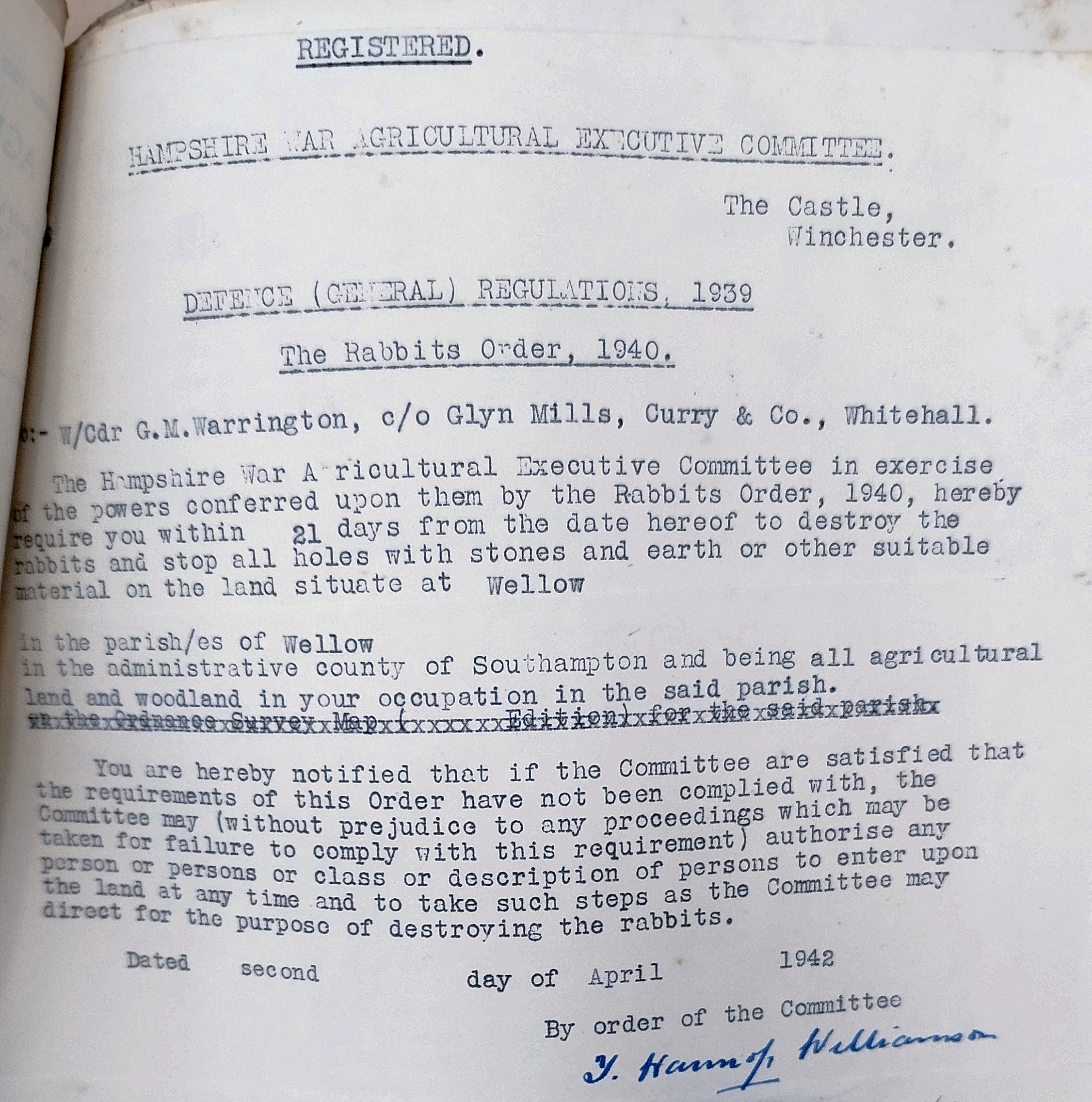
Wyn: "Rabbits were fair game and numerous. I became adept at paunching and skinning the blighters, nearly as well as Mother. The Agricultural Executive Committee laid down strict regulations about keeping them away from valuable crops, trees, fences, banks etc and one could get done - £25! - for not stopping up holes which became a full-time job. Poisonous gas and spring traps were permissible, but only underground."