Wyn's first 21 years


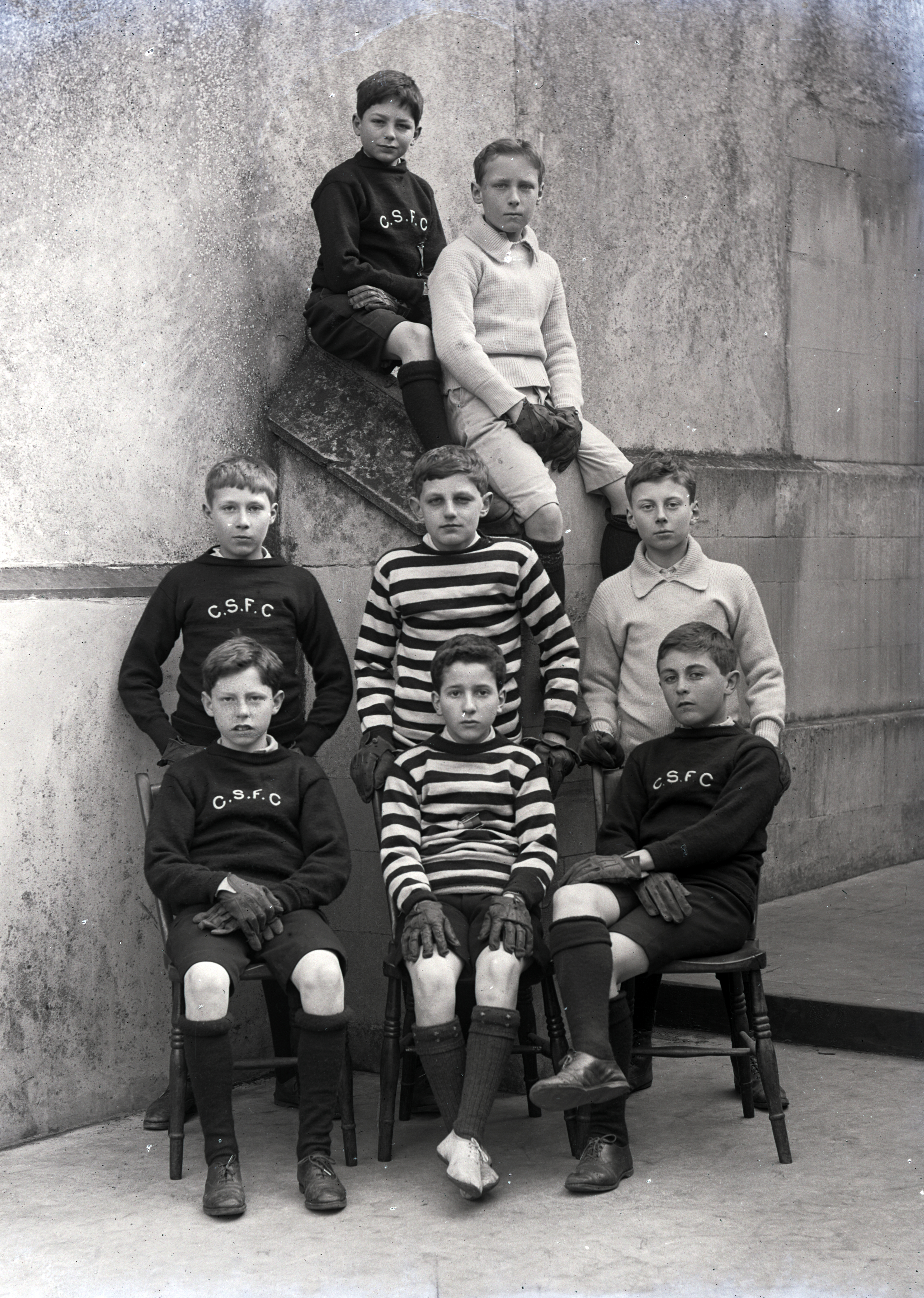
%2C%20Cheam%20School%20Fives%20club%201909.jpg)
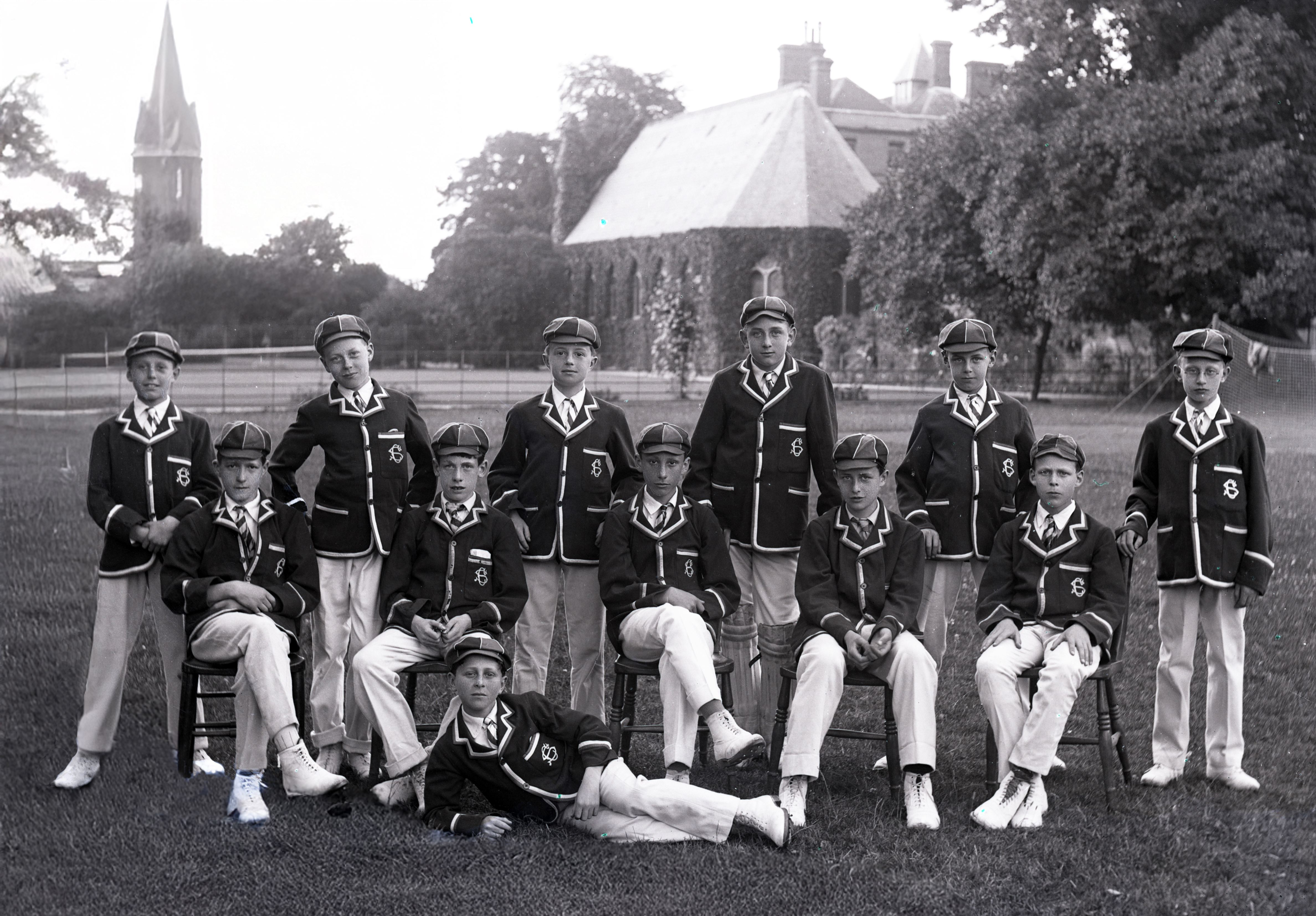
%20Cheam%20School%20second%20XI%2022%20July%201914%20just%20before%20leaving%20for%20Eton_.jpg)


%20Aug%201911.jpg)
%20on%20the%20croquet%20lawn%20at%20Eastcourt%2C%20Sheringham%201912.jpg)
.jpg)
.jpg)

.jpg)
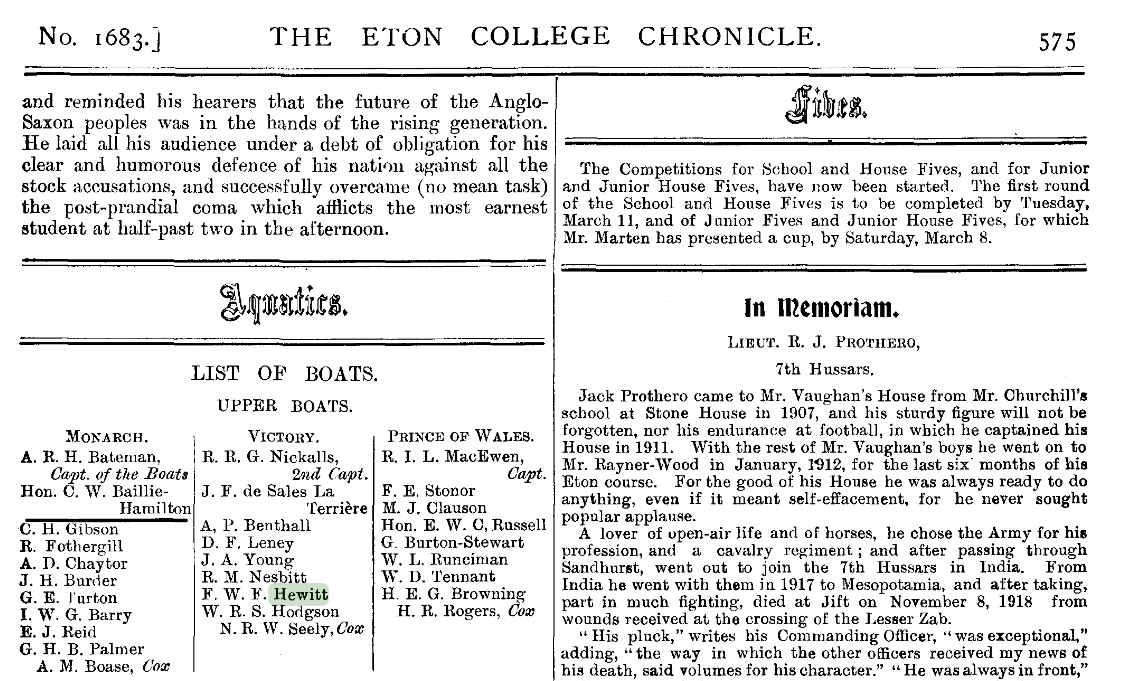
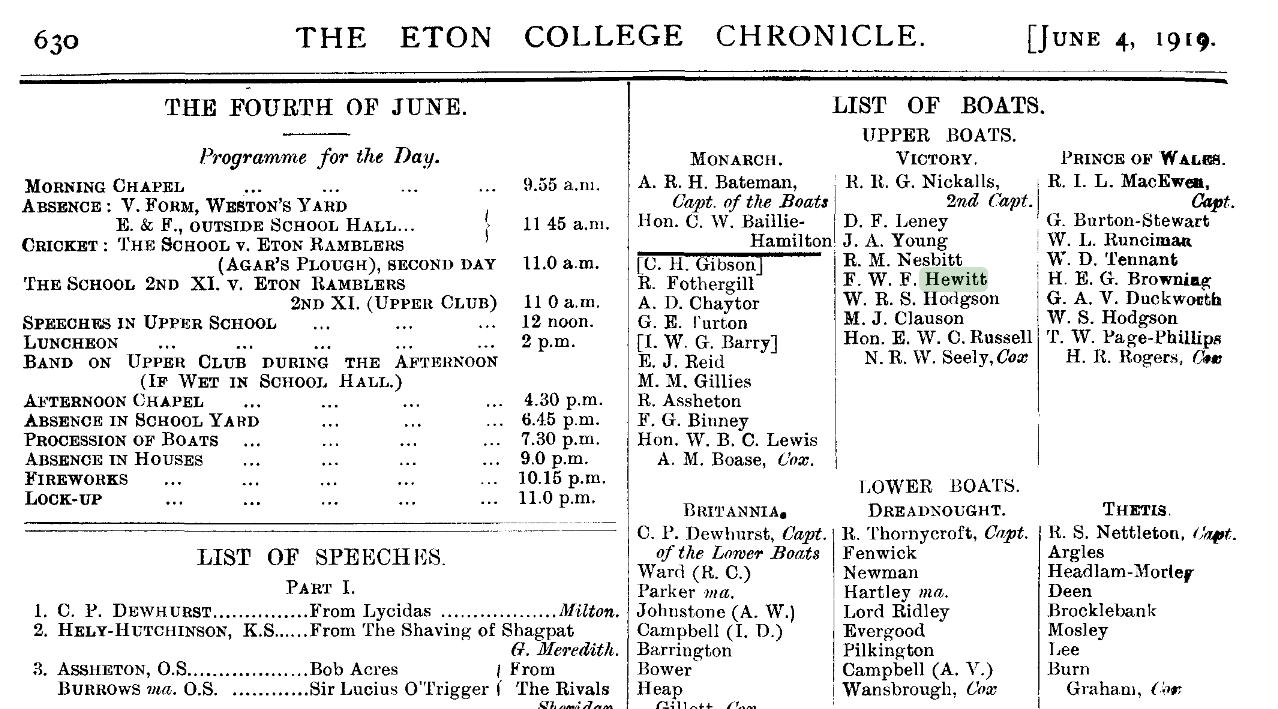
%20represented%20College%20in%20the%20Fourth%20of%20June%20celebrations%20Procession%20of%20Boats_%20(copyright%20Eton%20College).jpg)
.jpg)
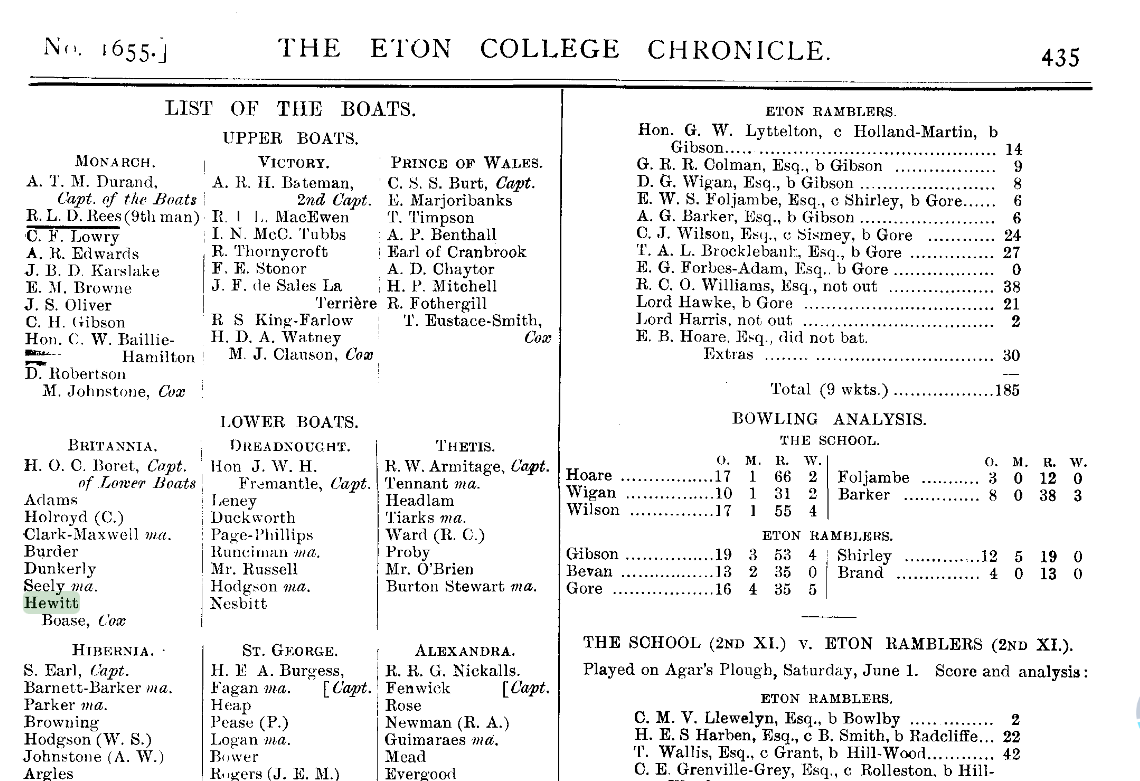
%20as%20part%20of%20College%20boat%20choices%201918_%20(copyright%20Eton%20College).jpg)
.png)
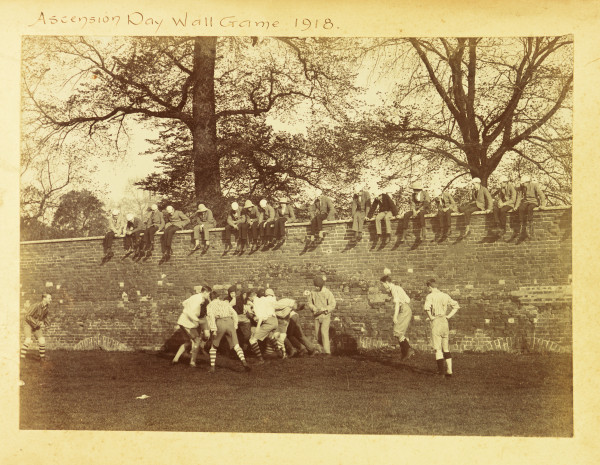
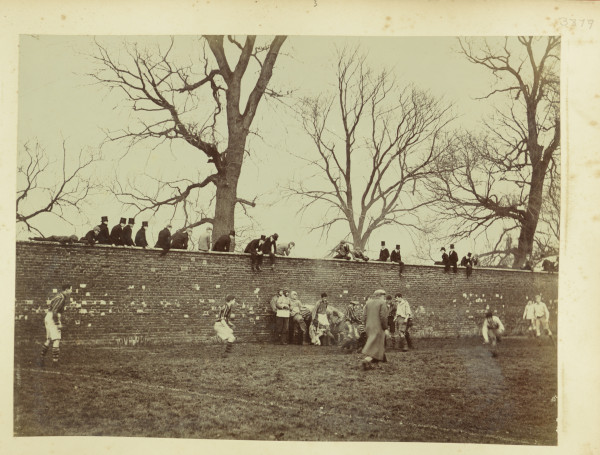
%20playing%20The%20Wall%20Game%20for%20College_%20Final%20score_%20College%204%20tries%20Oppidans%200_%20(copyright%20Eton%20College).jpg)
%2C%20November%201918_%20(copyright%20Eton%20College).jpg)
.jpg)
.jpg)
.jpg)
.jpg)
.jpg)


.jpg)
.jpg)


.png)


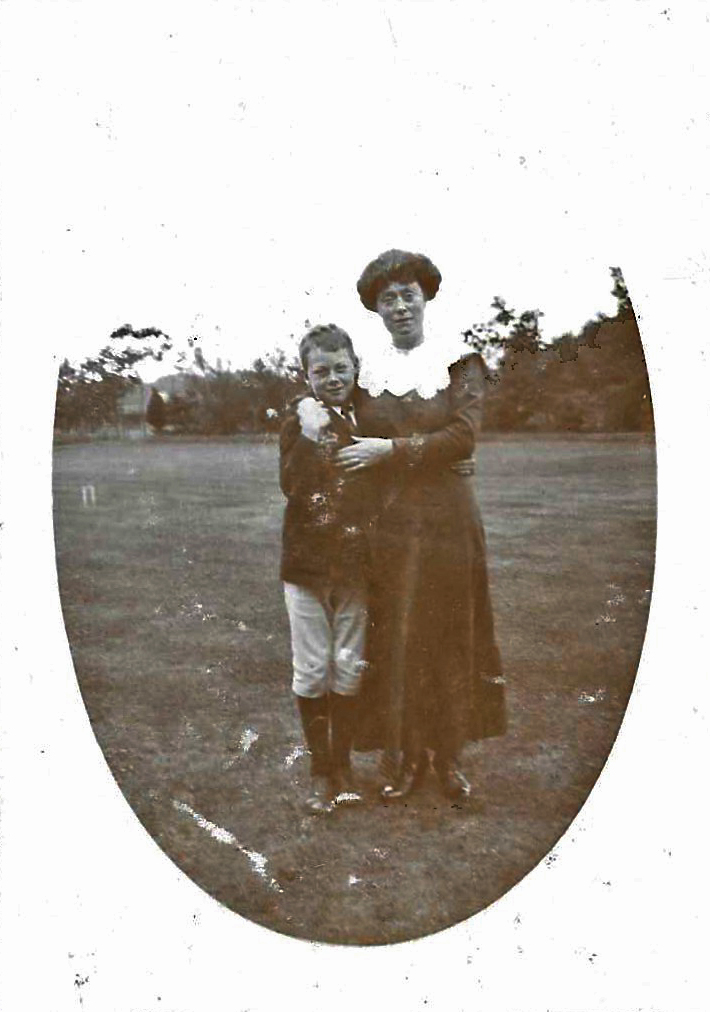
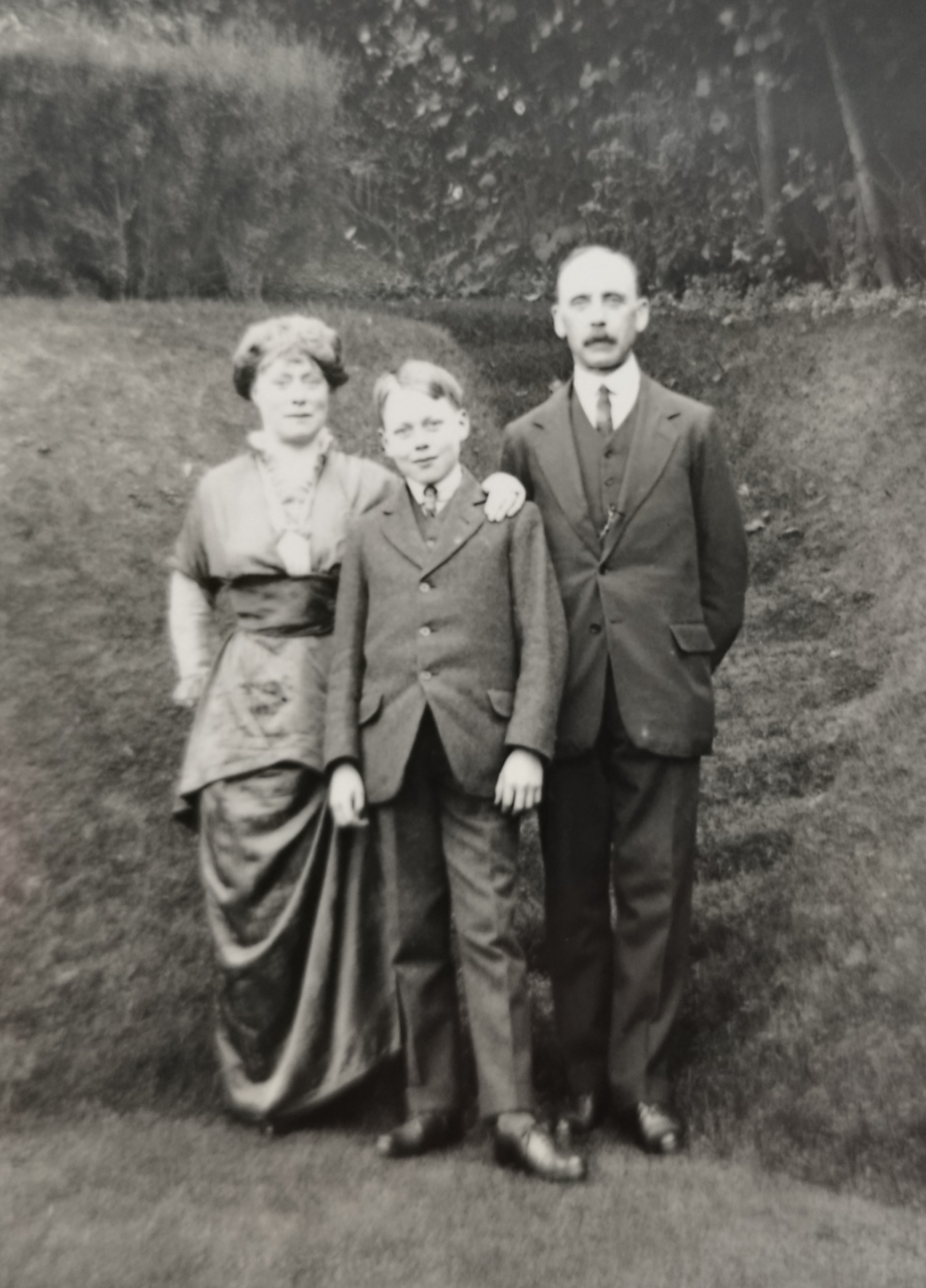
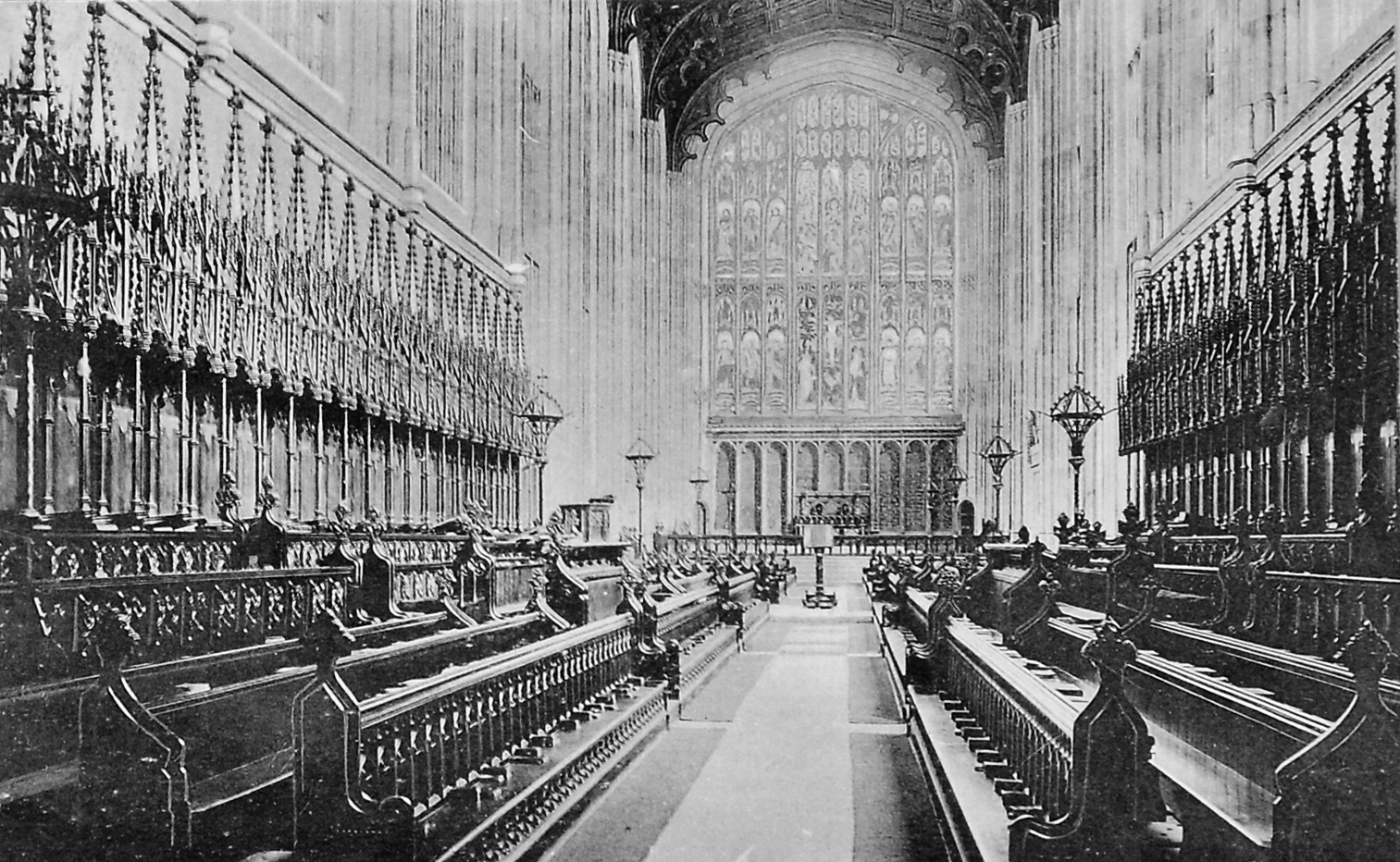
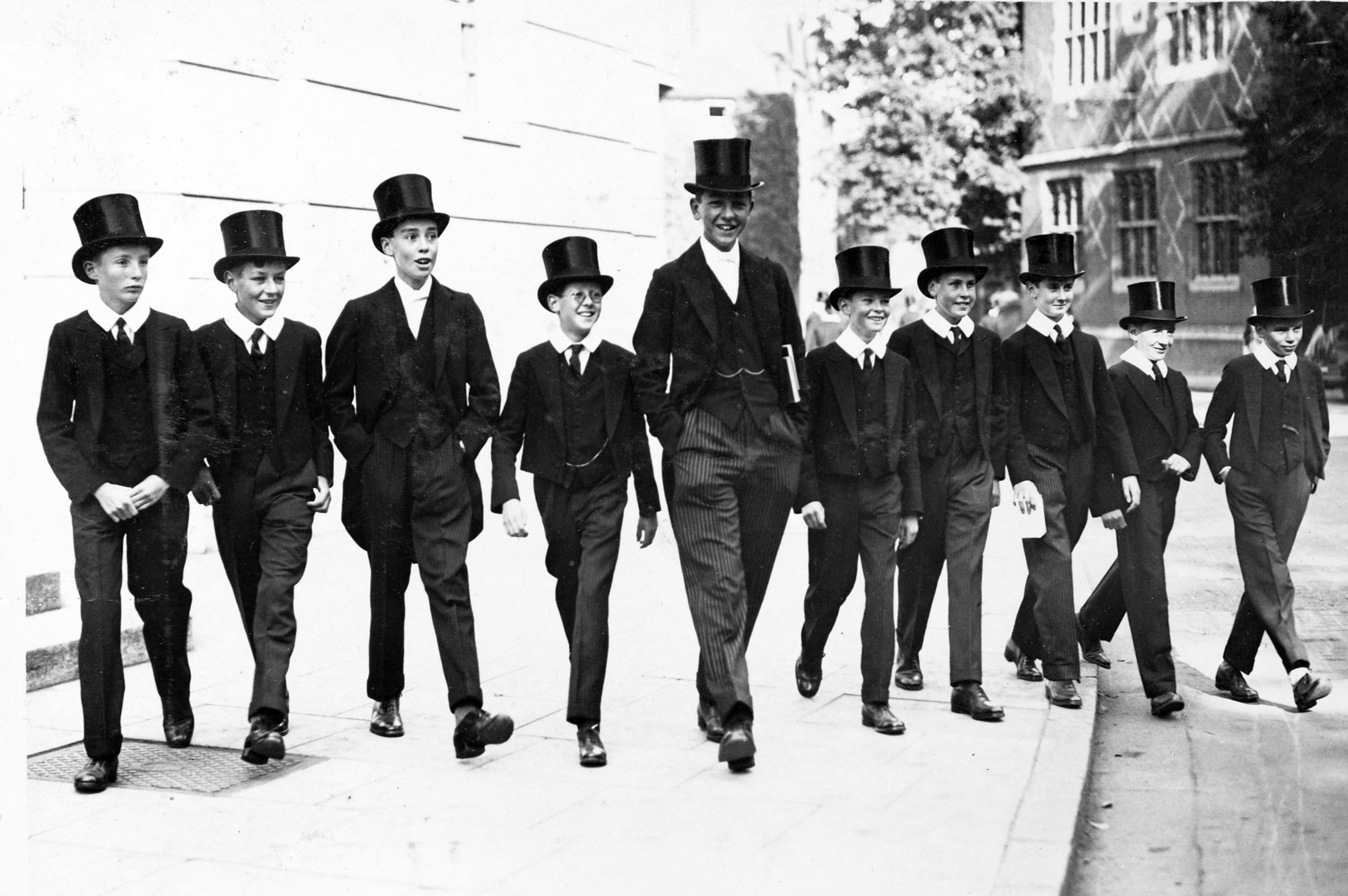
Stories and memories
Nature vs nurture
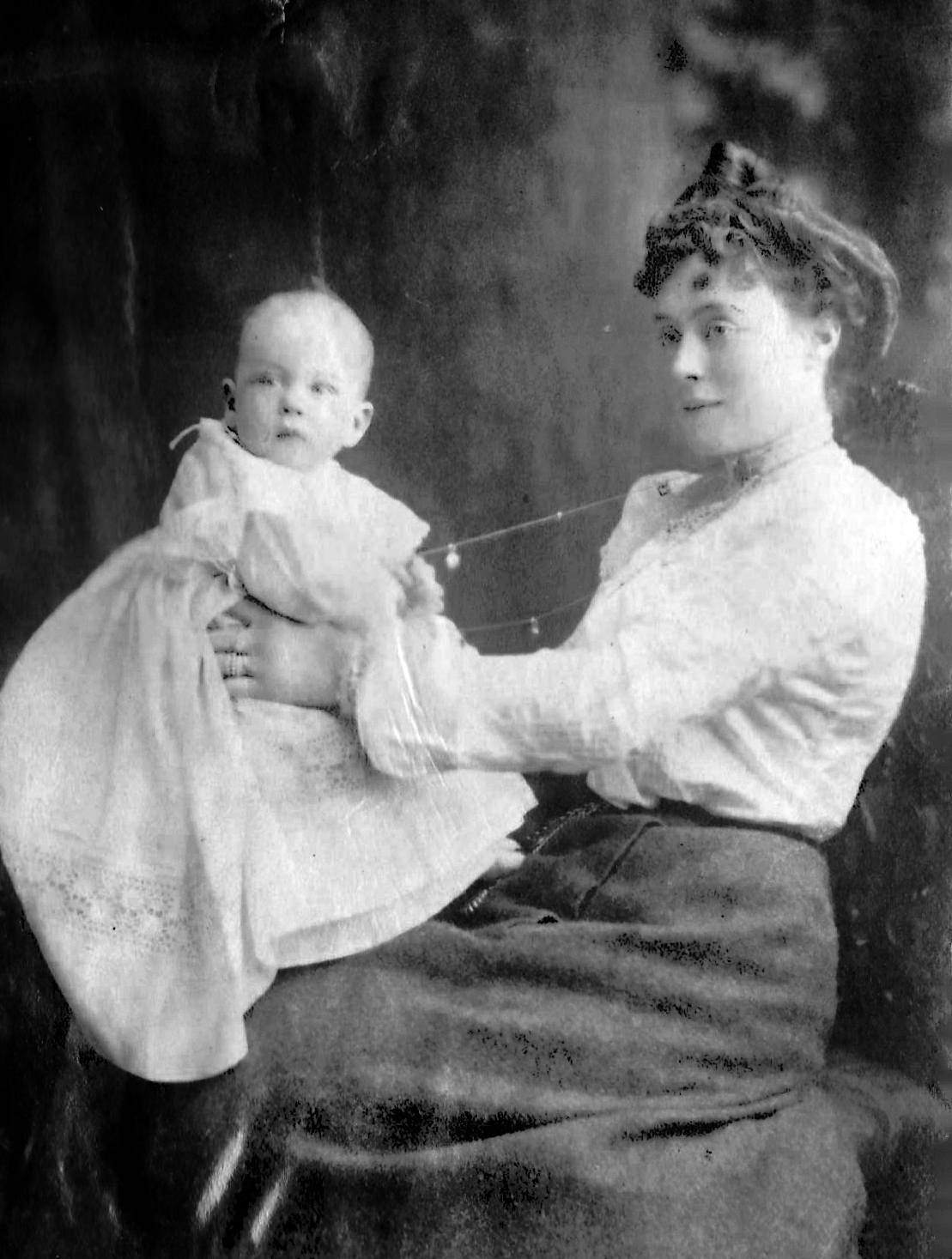
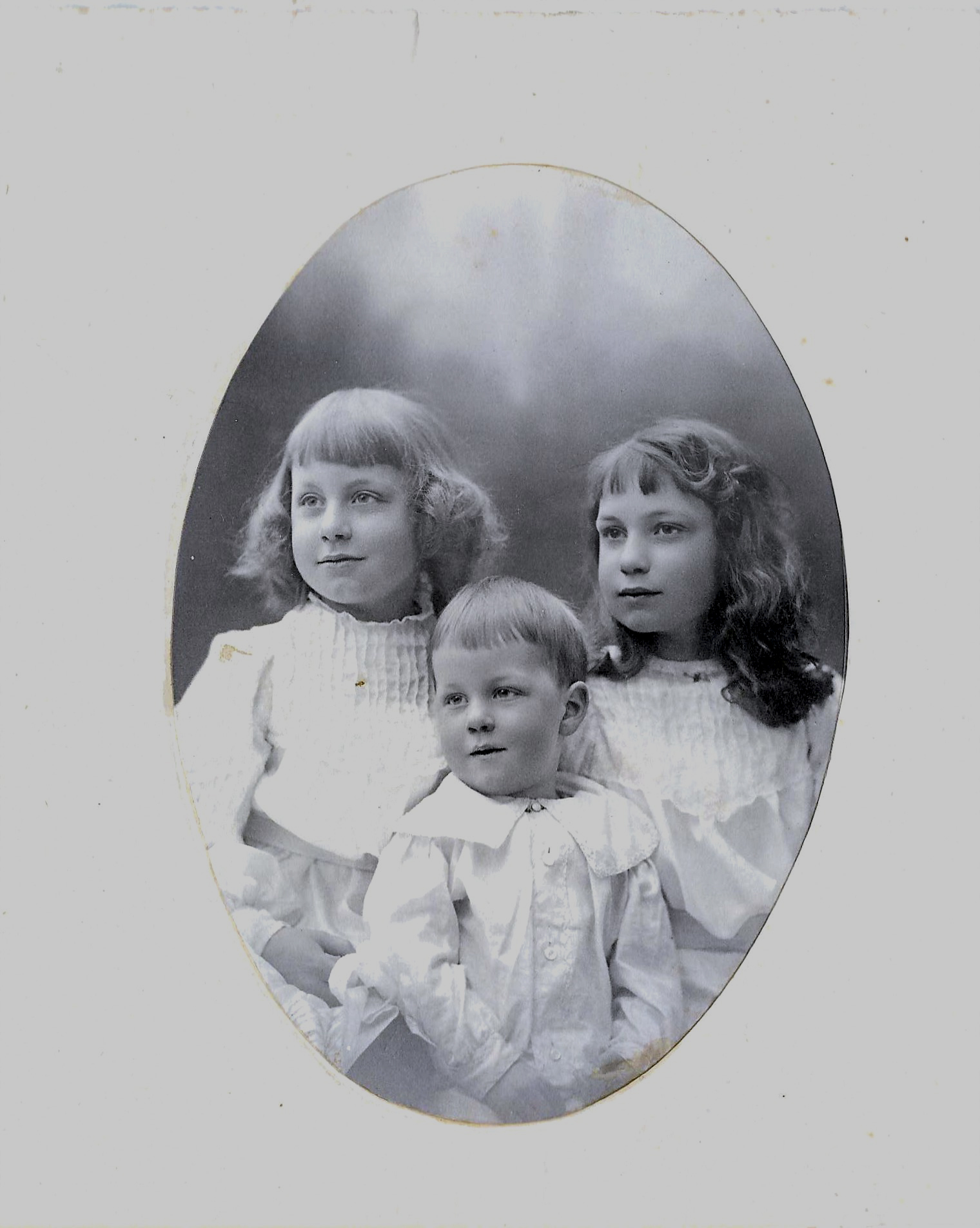
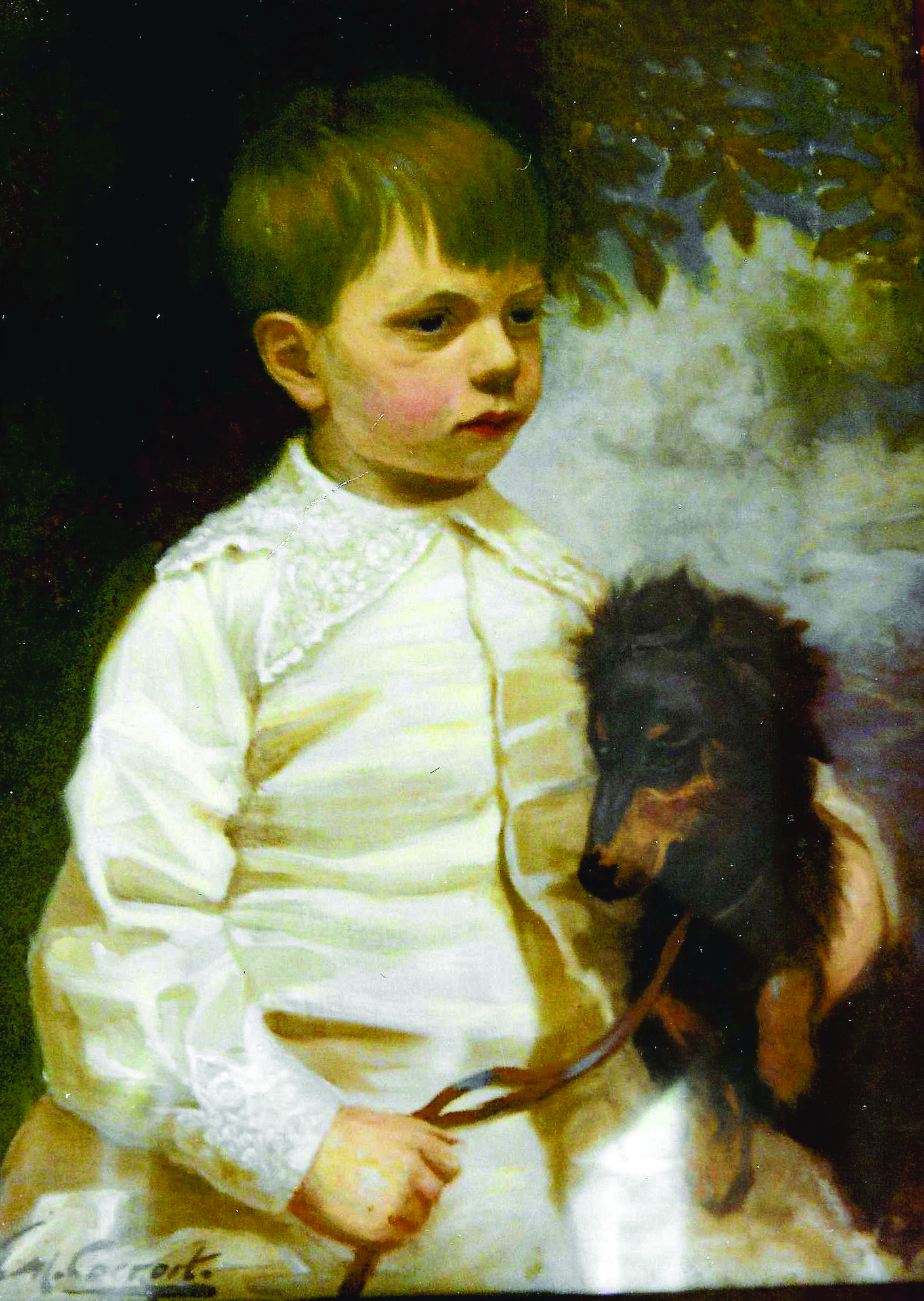
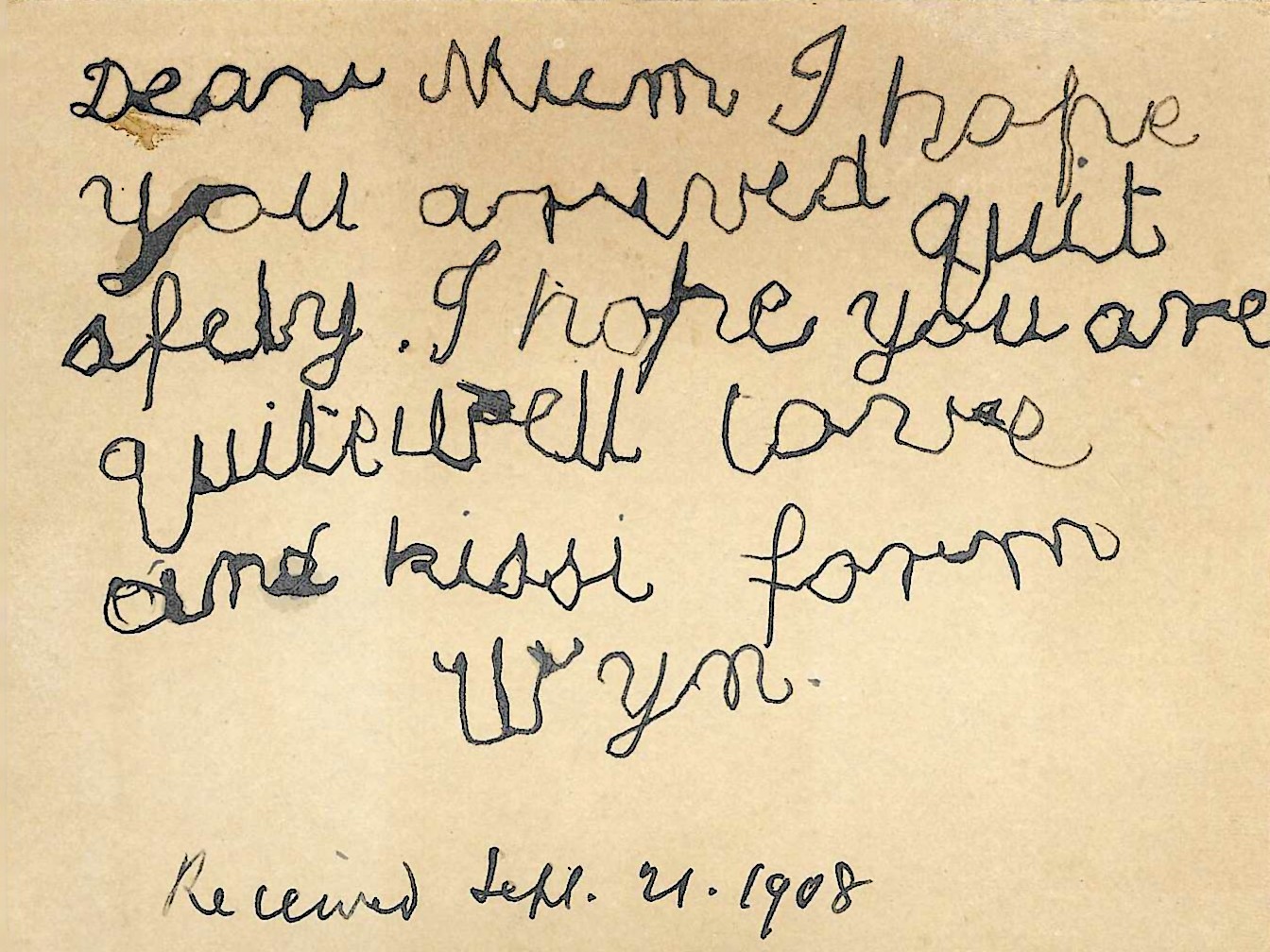
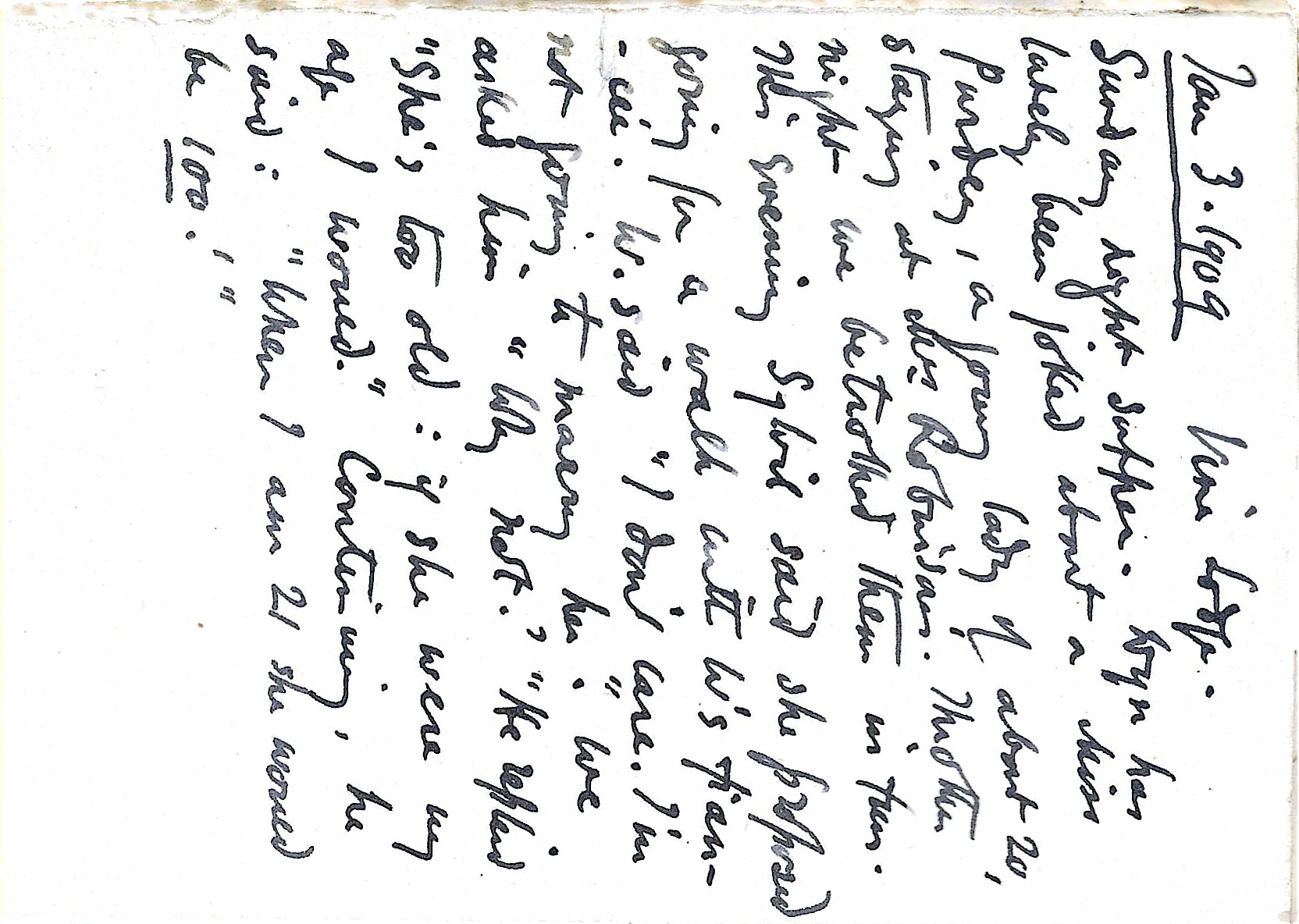
Sonny by name, sunny by nature. Wyn’s character started to reveal itself through Fred’s informal jottings and his choice of adjectives are insightful. Wyn was evidently confident, especially around his two older sisters who were mightily amused by him and spoiled him rotten. He quickly realised the more he performed, the greater the glory and applause. He was single-minded, imperious, charming, and capable of some impressive manipulation. The way he wound Woody the nanny around his tiny little finger was masterly and totally instinctive:
One day he wanted his ‘Woody’ to carry him from the bathroom to his room. When she refused, he said: “Woody, I’m going to be the courteous dog in the kitchen (an expression he had picked up from the rest of us). I do love you so… you are a dear, dear” etc. Woody of course gave way and carried him to his room. He had no sooner got there than he said wickedly: “Woody, you’re an old cat!”. Woody is still his devoted slave.
Oct 2 1904 – The boy is brimming over with life and movement. He is never still and never silent, except when asleep when he is both. His latest craze is a heavy iron chain with which he makes us prisoners and leads us off to dungeons. He wants to be a judge one day in order to send more offenders to the vaults. He has a gun we bought him in Brussels. His warlike qualities seem very pronounced.
One thing’s for sure: it was already a certainty he would become an engineer. When Wyn was three years old his dad noted: He delights in clocks, engines, soldiers and toy blocks. And again, when he had just started kindergarten in October 1905 aged four: He has a good memory and talks of nothing now but engines, motors, wheels, cranes, boats, tunnels etc. He has been playing today, Sunday, as a great treat with his railway given to him by Theo.
Fred also noted his restlessness and appetite for adventure was developing nicely: He is never still, never silent, and never without appetite either for fun or food. He is always rushing about, climbing, jumping, falling, shouting, chattering, busy doing something or another. The boy is a great acrobat and completely fearless. He loves to stand upright on my shoulders, just holding my hand, and to then jump down.
Wyn: "Life at Vine Lodge as far as I was concerned was bicycles, swimming at Henley, commencement on golf and an introduction to guns. I had my first 16 bore at the age of 8 as well as air rifles, and I was taught to shoot by a local game keeper while we were out rabbiting. We always started at about 5 am and he used to come around to wake me by means of tugging on a string tied to my toe that hung out of the window. It is out of fashion now, but I always found good sport in hunting and shooting. Much time was also spent in the local blacksmith’s shop where I did learn a little about old fashioned forging. Also, in the carpenter’s shop of the local builder. My wise Dad, who himself loved making rustic pergolas when he had time enough to come down for the weekend, arranged for one of the carpenters to come to the house once a week and give me lessons which later proved extremely advantageous. I crafted odd looking vehicles with mismatched wheels in one of Dad’s outbuildings, hopping from foot to foot in anticipation of showing my skills off to him as soon as he stepped foot in the door of a weekend.
As a small boy, we had two carriages with two horses to pull them that were kept in the mews behind 14 Queen Anne Street in London. They were looked after and driven by our coachman, Chilton. In 1908, and after a lot of financial calculations, Dad came to the conclusion that a motor car would be more serviceable than horses. Having decided to make the change, he didn’t want his pet horses to fall into bad hands, so he decided to send them to the zoo to be slaughtered for exotic animal feed. Chilton was delegated to carry out the task but being the day of the month when they habitually went to be shod, he duly took them to the smith and then on to the zoo after having nice new shoes fitted! Dad then sent Chilton to driving school. He was in fact sent twice to make sure he learnt thoroughly, as on his first solo trip he promptly crashed headlong into the gate post, all the time pulling on the wheel and shouting: “Whoa!” which made this small boy laugh and laugh.
I was eight years old when Dad bought our first car - a Daimler TB22 Drophead with a sleeve valve engine - and cannot adequately describe the frisson of excitement I felt when I first saw it sitting on our driveway. I learned to drive right then and there, manoeuvring around the yard, and eventually down to the road and back. My lifelong passion for cars, combustion engines and the possibility of speed and adventure was well and truly sparked."
Floreat Etona
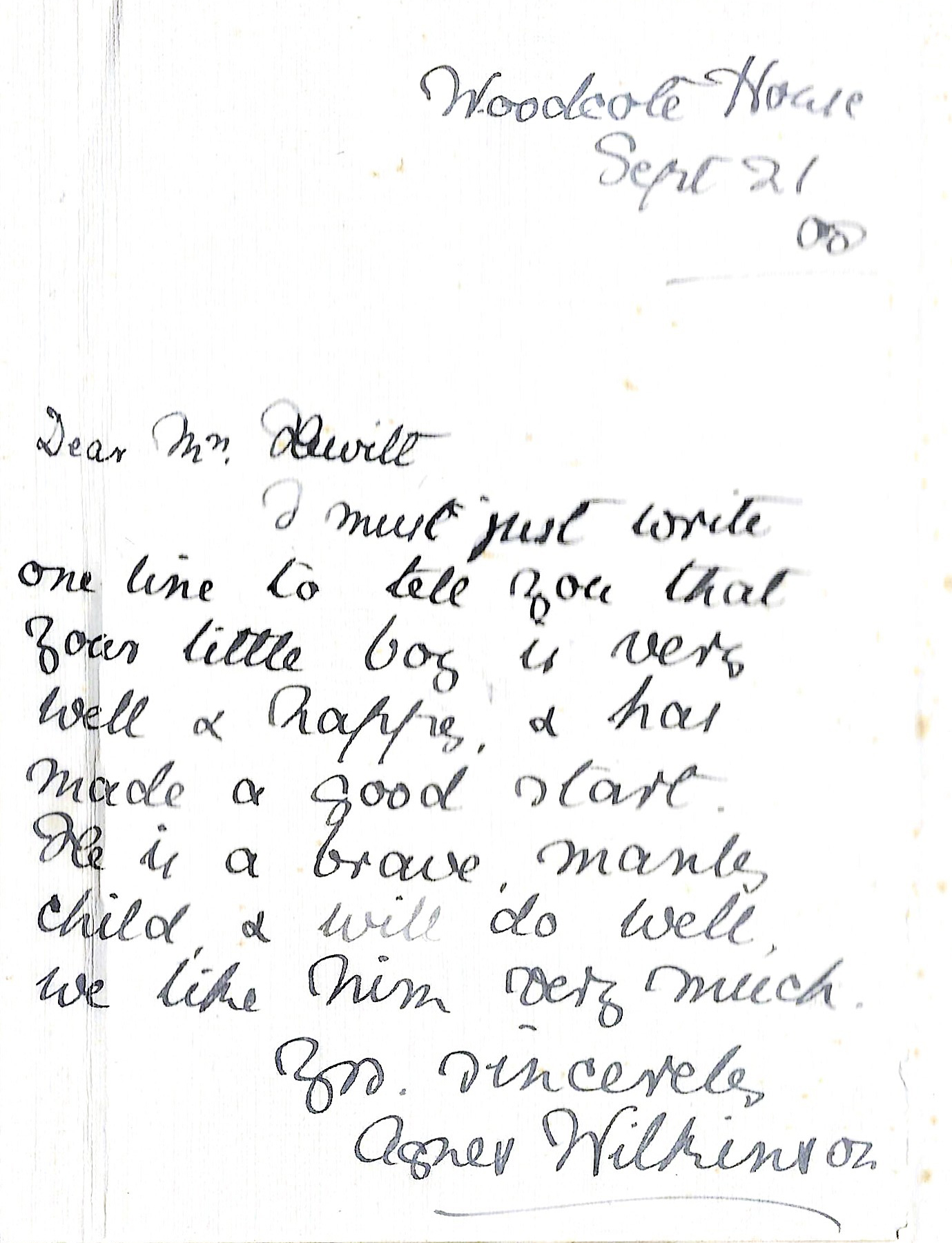
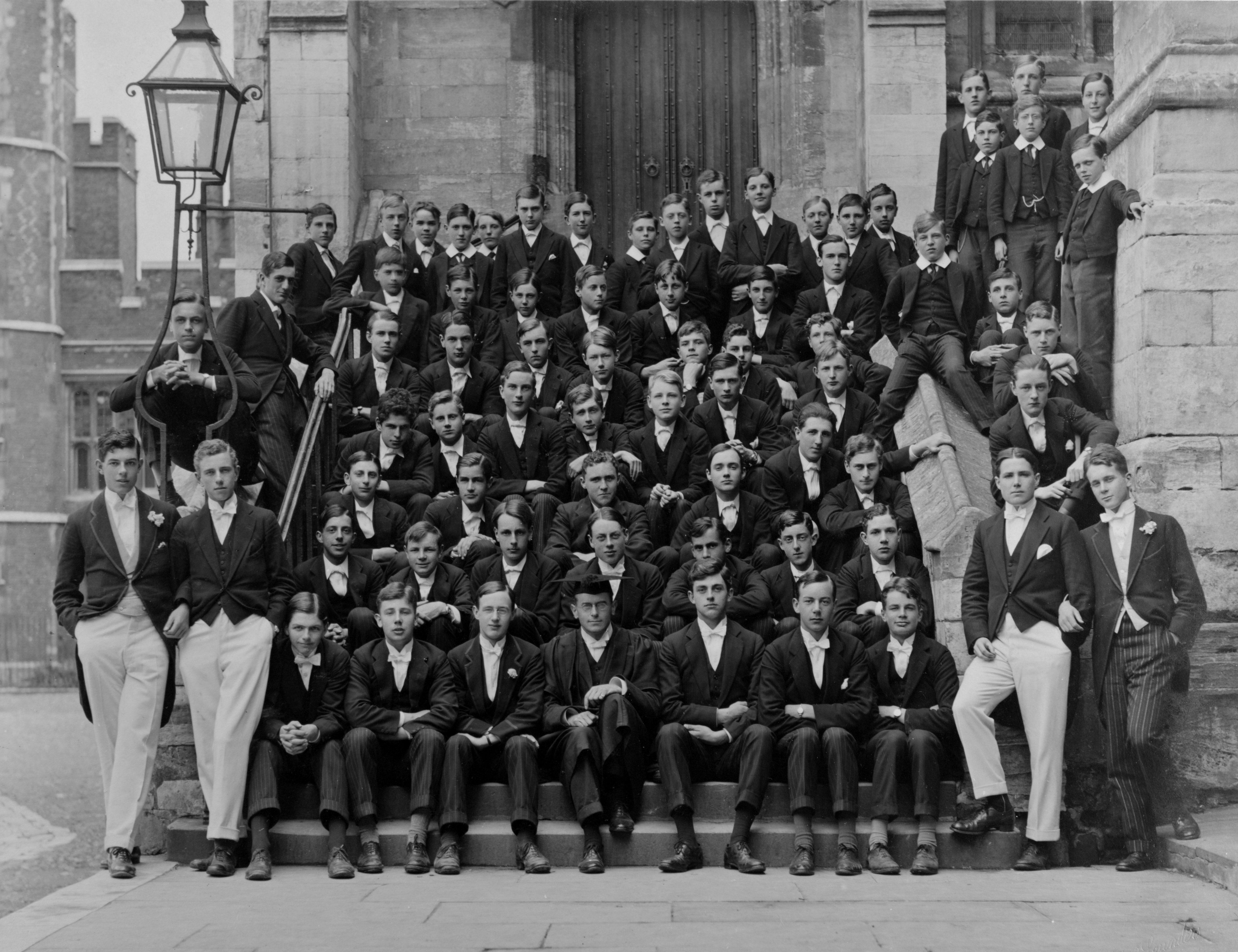
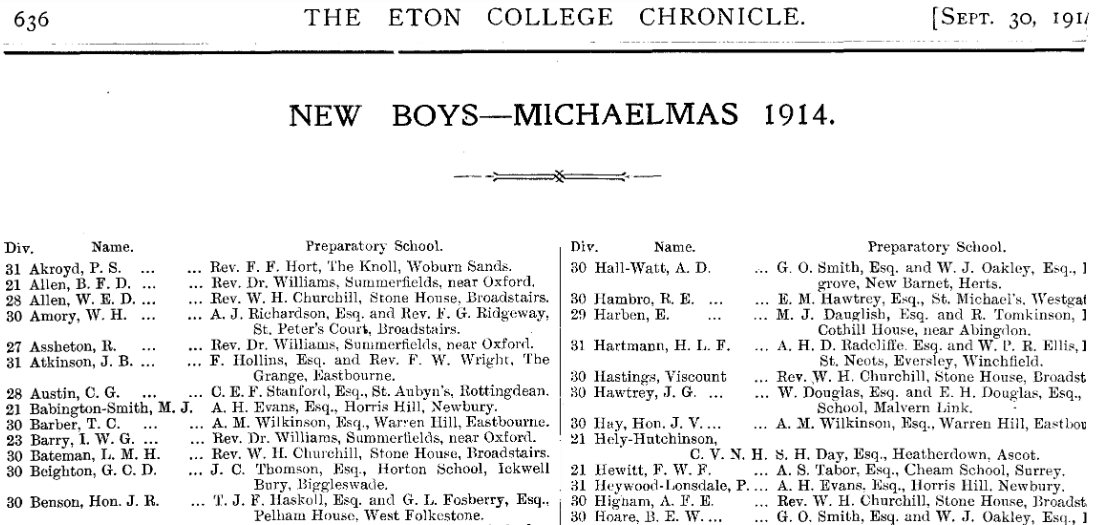
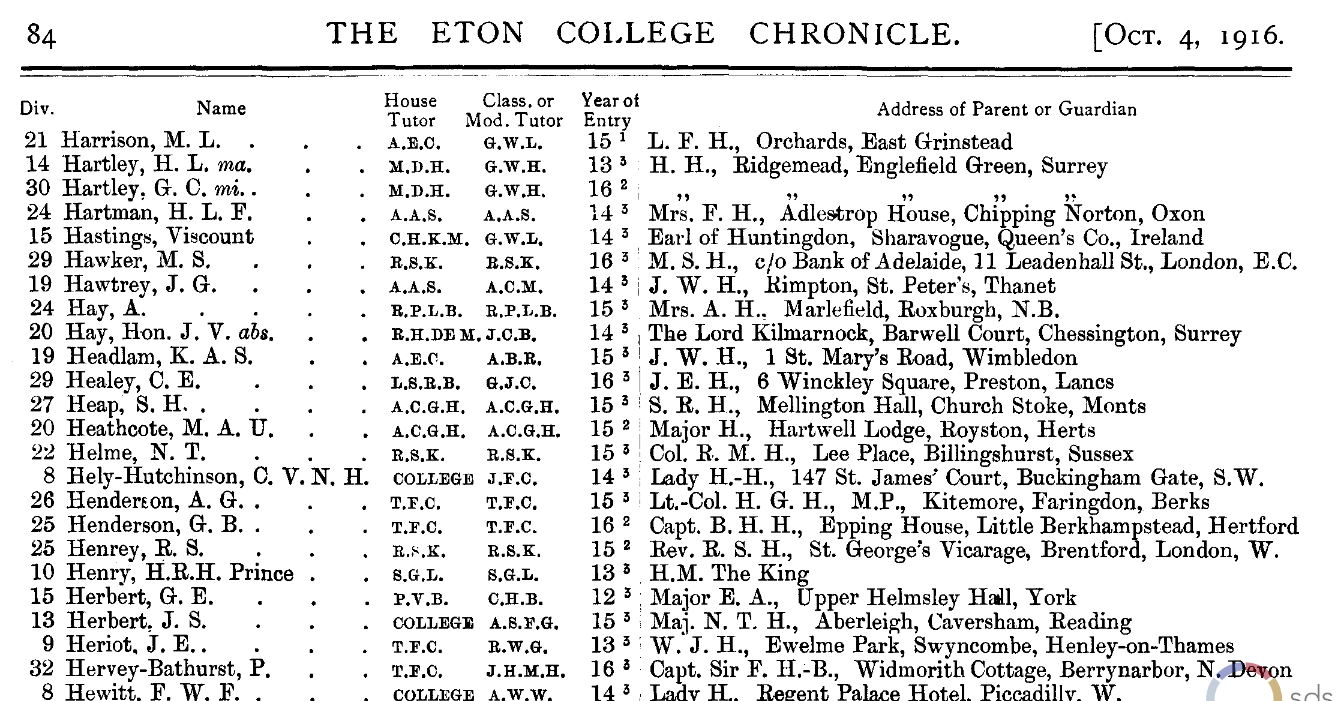
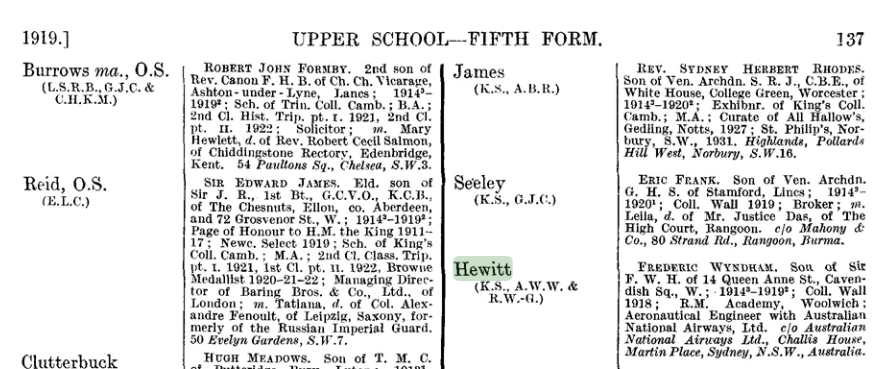
Having been put down for Winchester as a young boy where it was hoped he’d get a scholarship at 13, Cheam advised Fred and Eve to send him to sit the Eton College scholarship exam in the spring of 1914 as a dry run, to give him an idea of how challenging the entry process could be for the top public schools. It had the reputation of being one of the most challenging exams around, but then its job was to sort out the wheat from the chaff. Wyn sat timed papers on Latin composition in prose and verse, translations from Greek and Latin authors, grammar, mathematics (including ordinary arithmetic, algebra and geometry, and general knowledge including an elementary examination in French. Wyn only went and secured a scholarship to one of the most prestigious schools in the world.
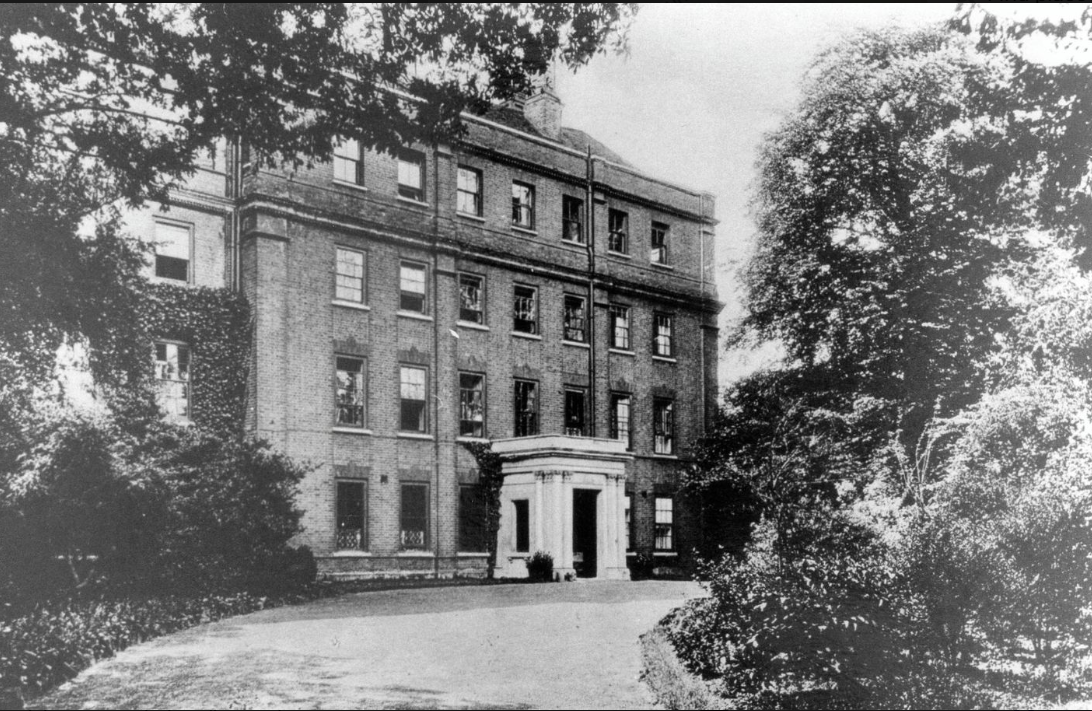
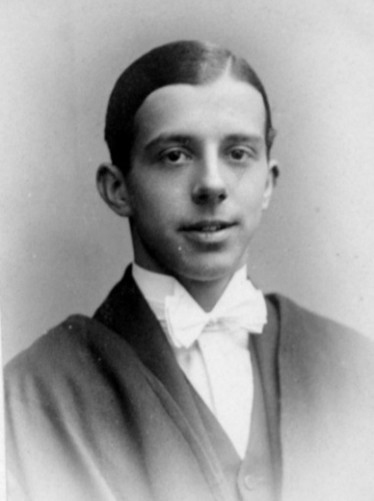
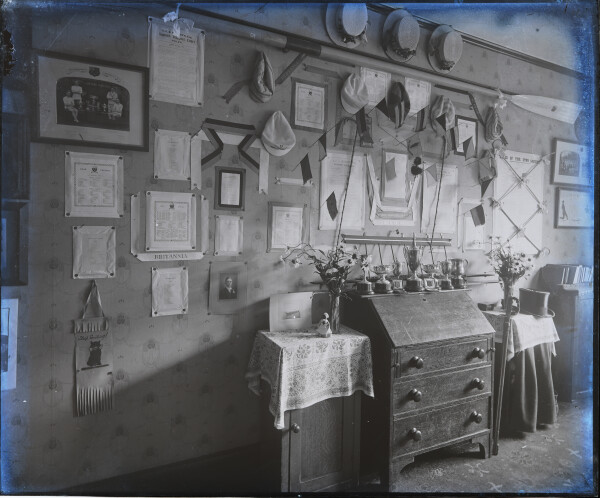
Wyn: "Eton was the beginning of my youth, and I can truthfully say that I thoroughly enjoyed my stay there. The only warmth we had in our rooms was a coal fireplace, an unthinkable hazard by today’s safety standards. We were all bloody pyromaniacs at heart but I managed to get through five years without serious injury or burning buildings down. I slept in a sparsely sprung single bed that pulled down from the wall, the wire springs pressing through the thin blankets but one can get used to anything, especially when young. It soon became apparent my space would only remain in order if I put the work in myself. There was no maid to pick up after me, so at 13 I started a lifetime regimen that satisfied my fastidious nature.
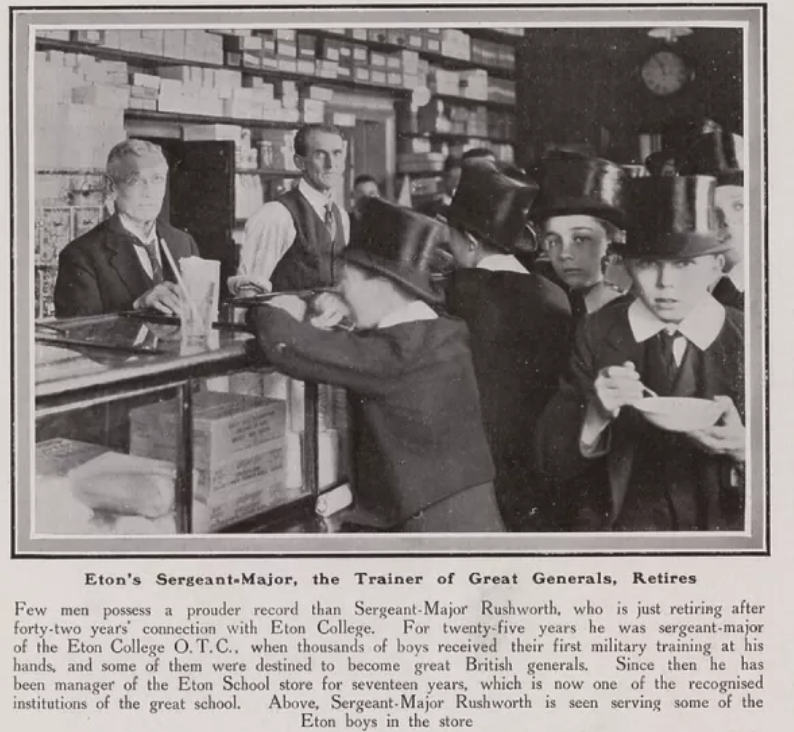
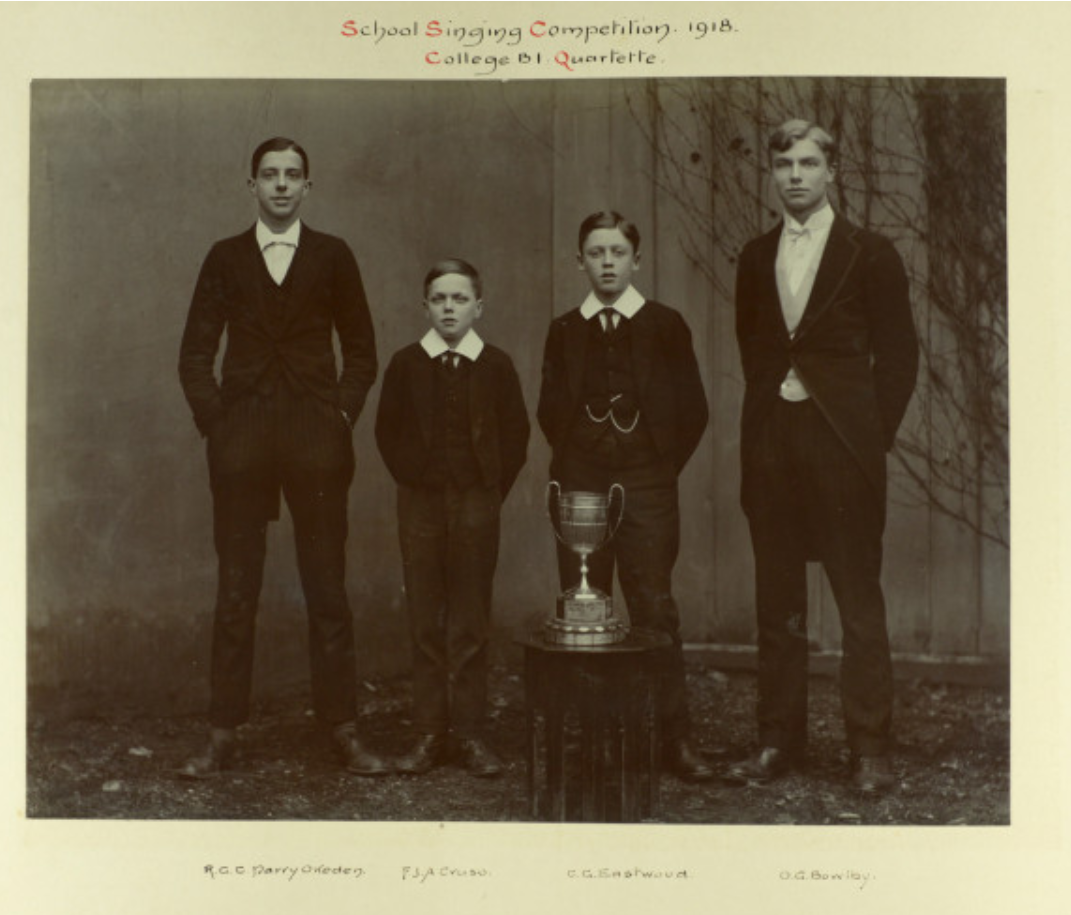
Three or four of us would ‘mess’ together at teatime (this is the origin of the dessert Eton Mess – an easy tea time treat assembled on the spot) pooling our own supplies of whatever we’d bought from School Stores or been sent from home. This tight knit group was where my closest lifelong friendships were forged. Gordy Wentworth was one of them but my best chum was Dick Parry Okeden who was nine months older than me.
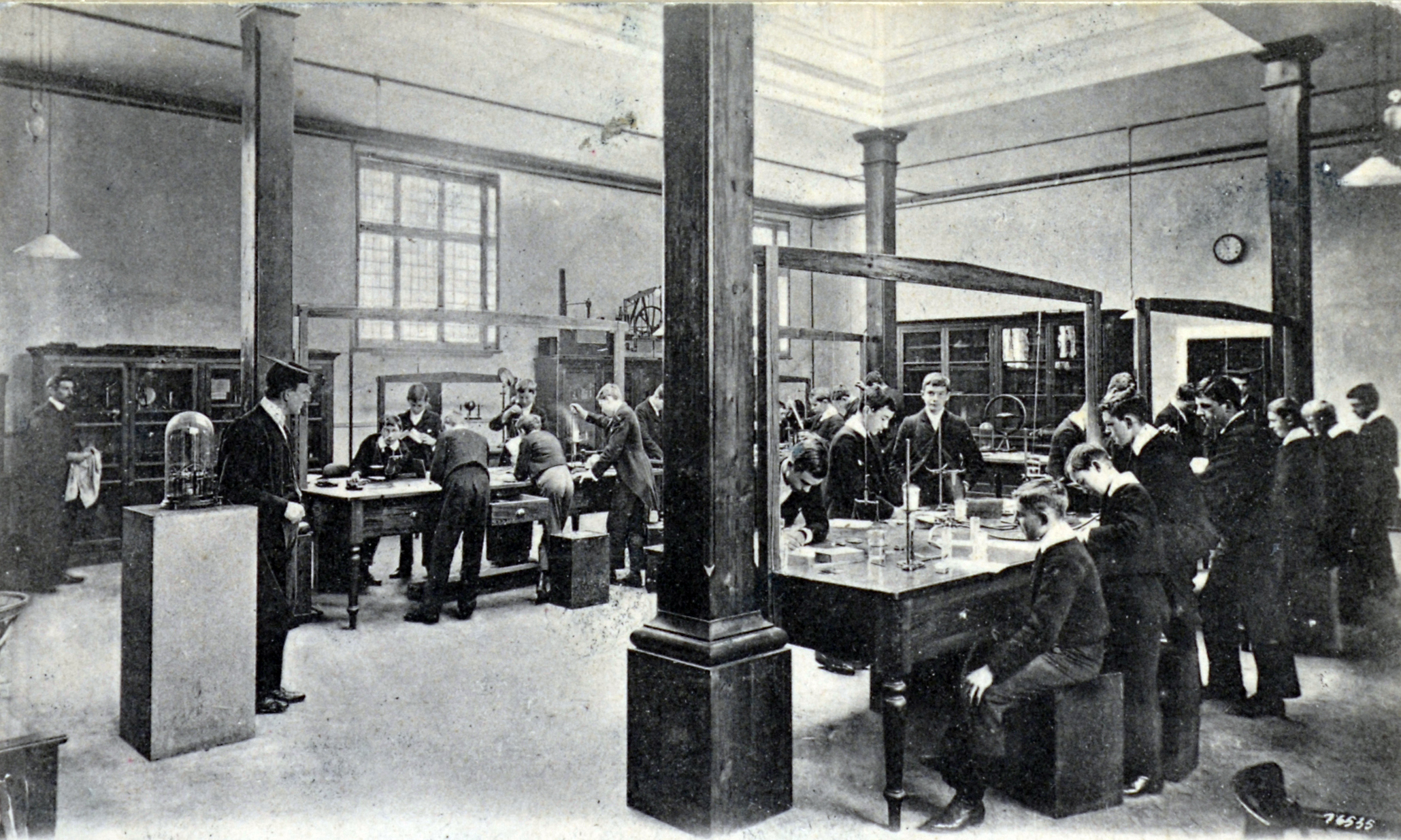
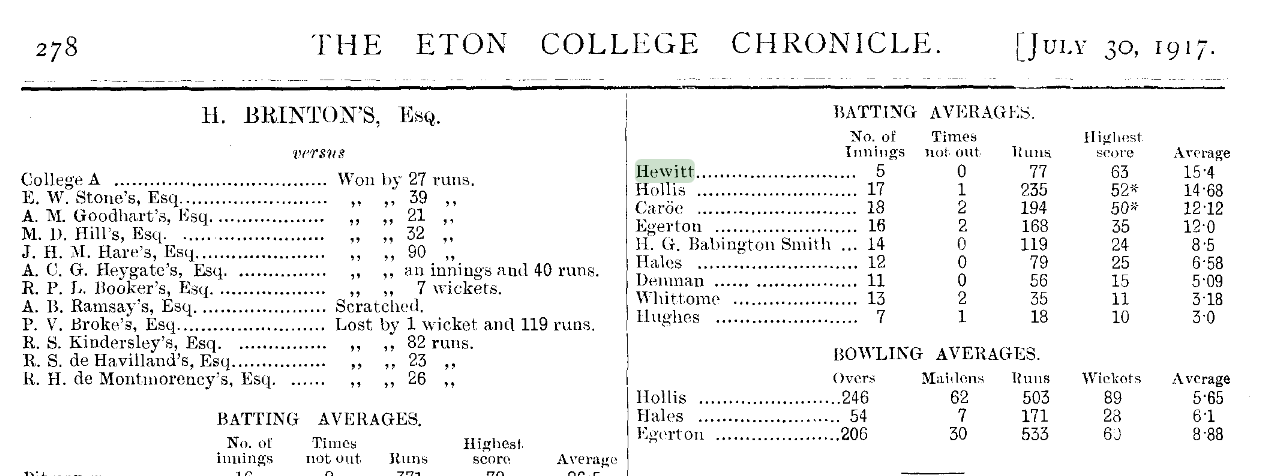
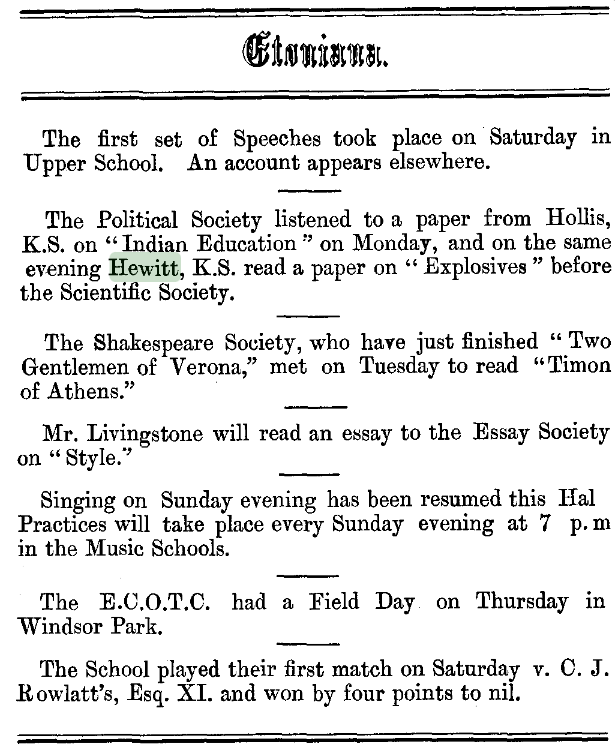
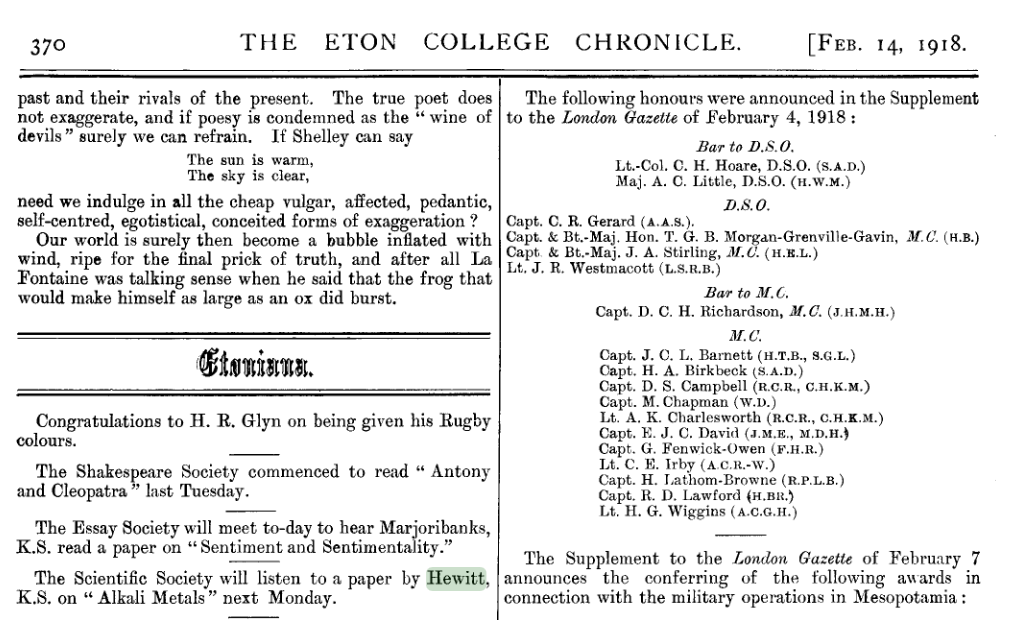
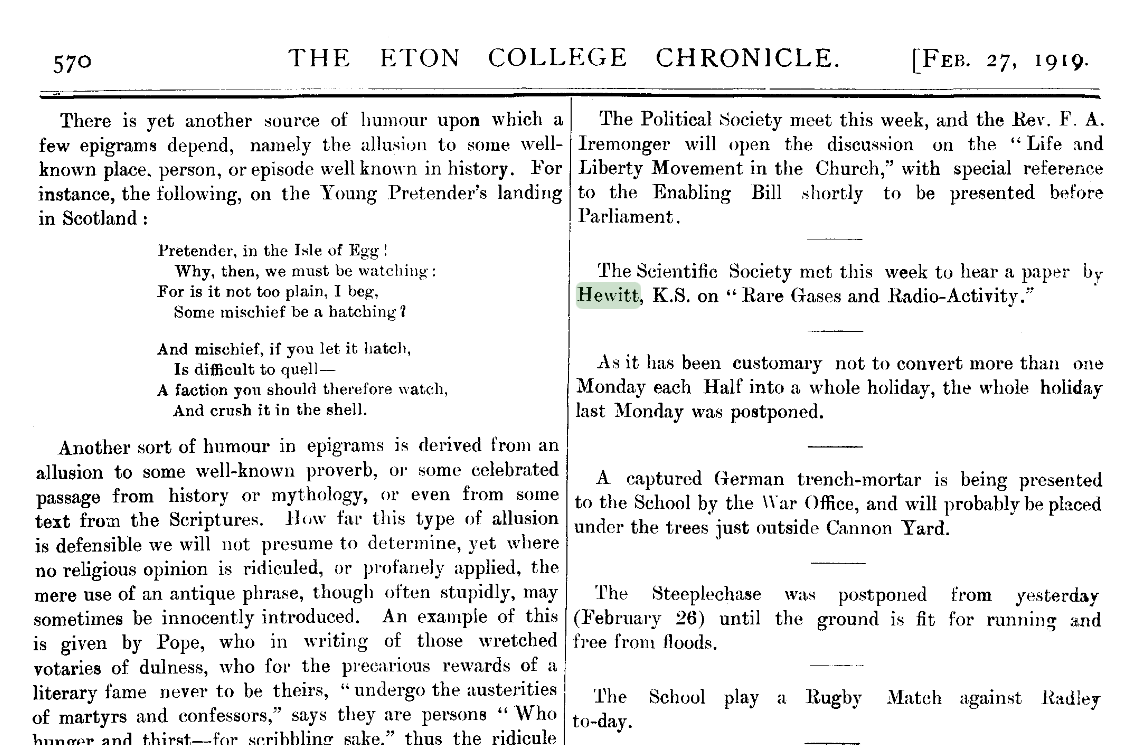
After two years of compulsory classics I could focus on history, science and mathematics. Like Dad, I concentrated on science and had for tutors an excellent chemist, ‘Tricky’ Ager, who developed poison gases during the war as well as John Christie, an old boy who came back to teach for seven years. He later founded and owned Glyndebourne. I became a member of the school Scientific Society and delivered three papers - ‘Alkali metals’, ‘Explosives’ and ‘Rare gases and Radio-Activity’ – but cannot judge how well they were received. At any rate, I was not challenged to depart the stage!
I spent all my free time in the School of Mechs. Motorbikes were of course prohibited for current use, but the building was suitably placed so one could get out on the back road to Datchet and there were several machines kept and used clandestinely. It was at this time that I got my first - an ARNO bought second hand from my mother’s jeweller Mr Harris, and I remember making disc wheels for it. It was wartime and I can’t remember how we managed to get petrol, but we did. It was subsequently replaced by a two-speed Enfield with troubling slipping gears which were simply friction bands rather in the old Model T Ford style.
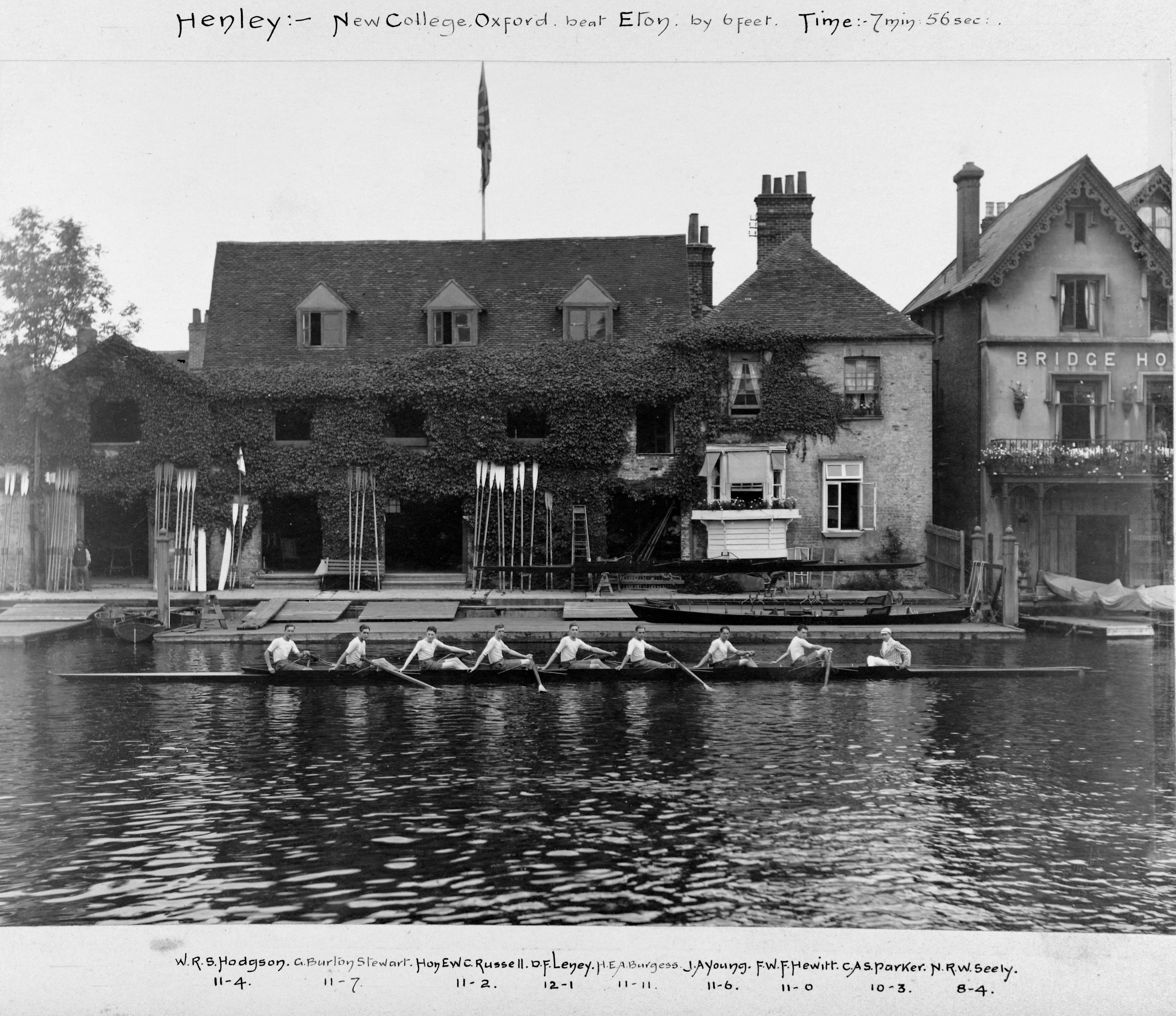
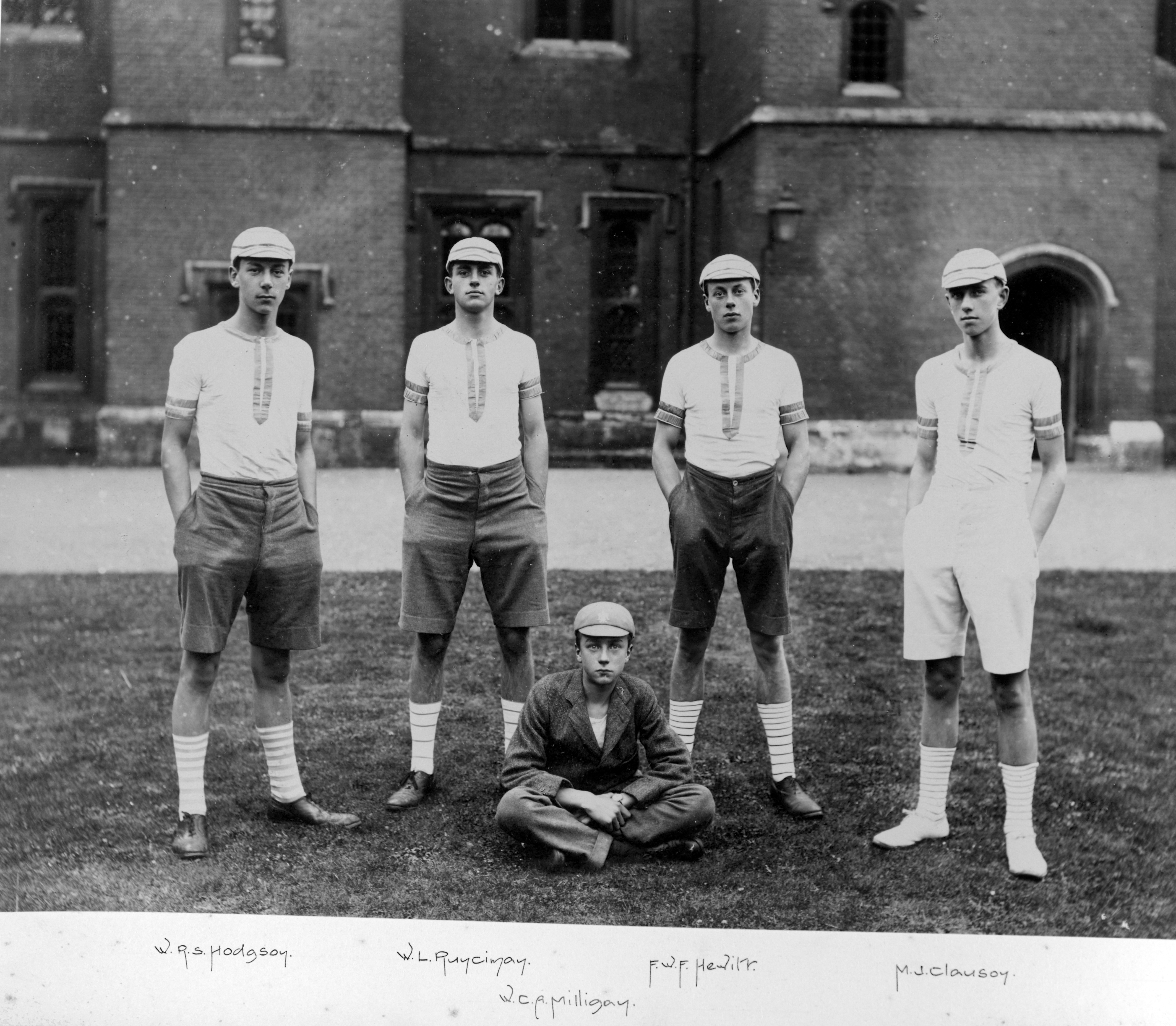
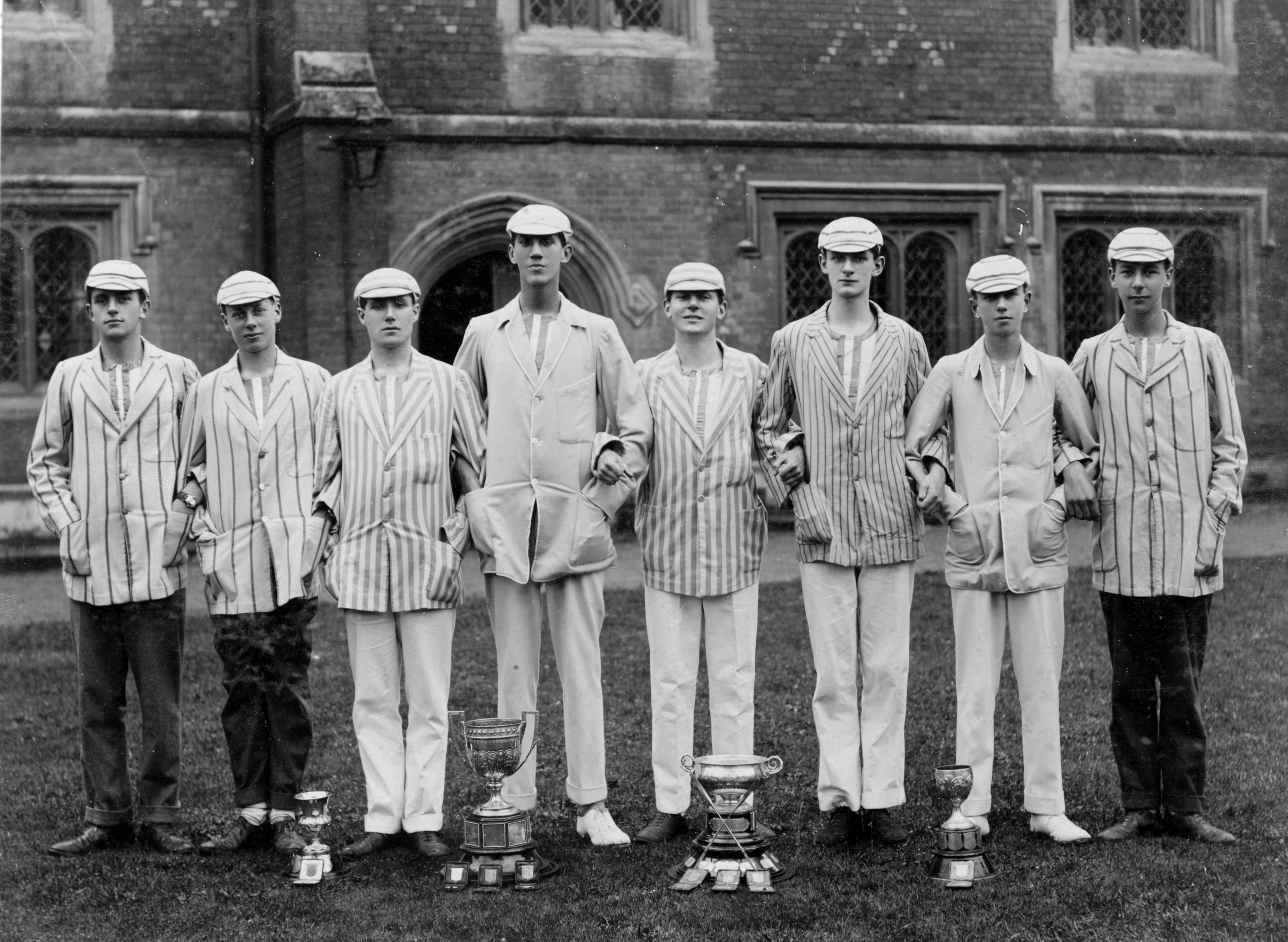
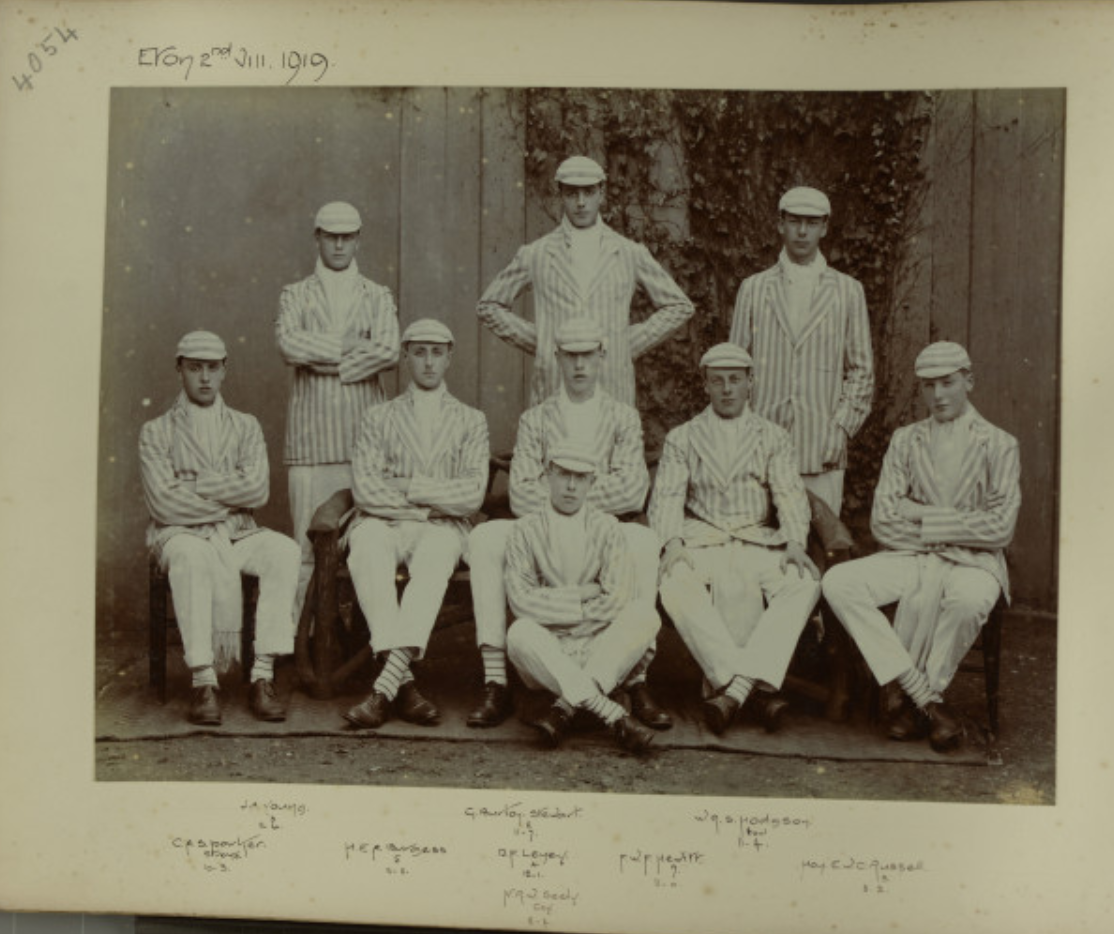
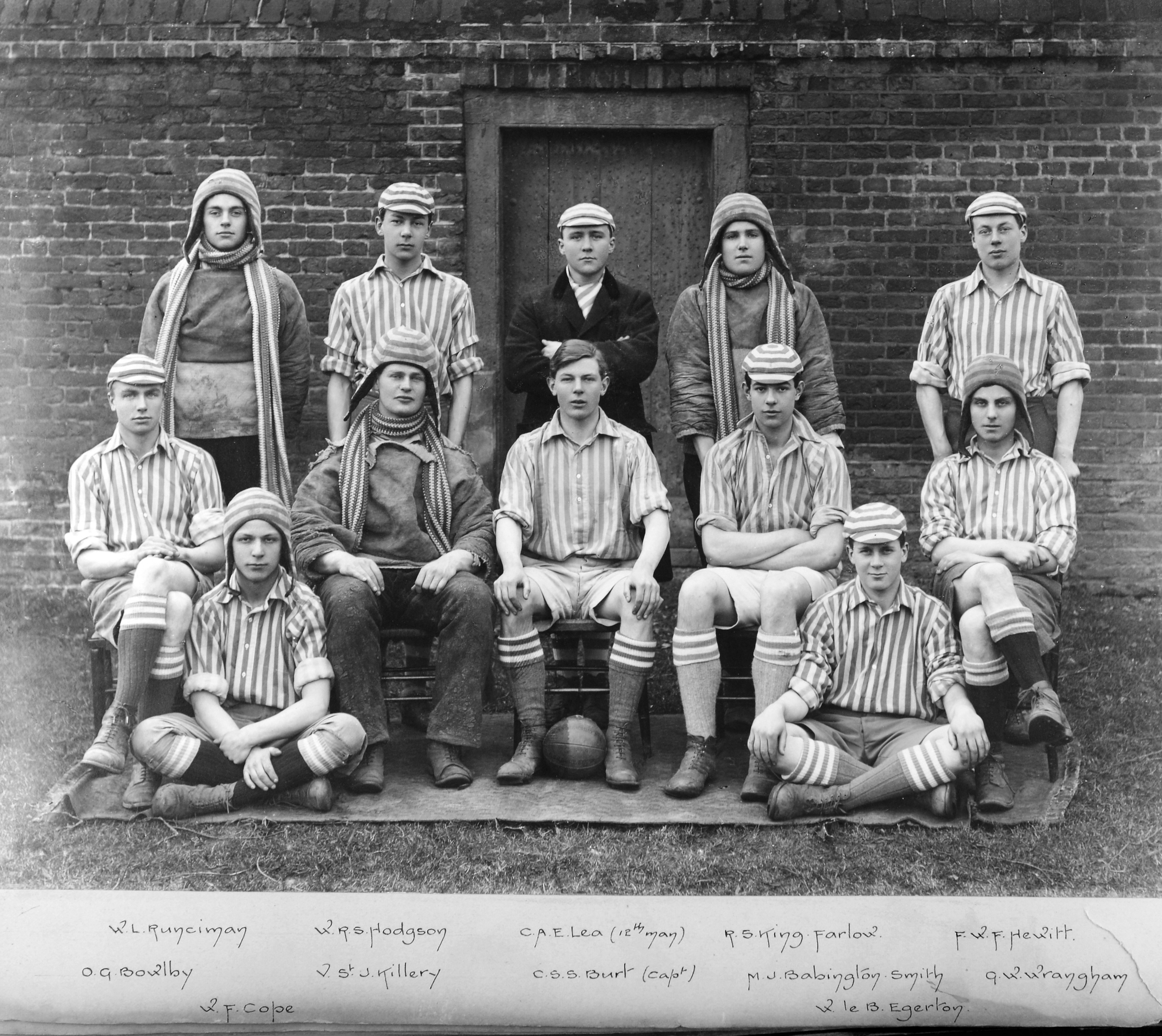
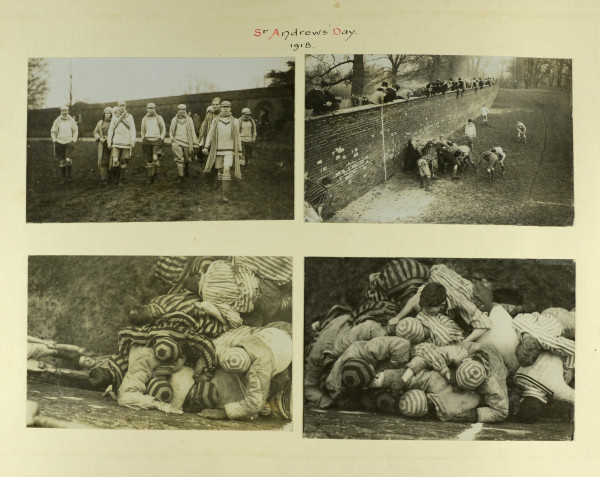
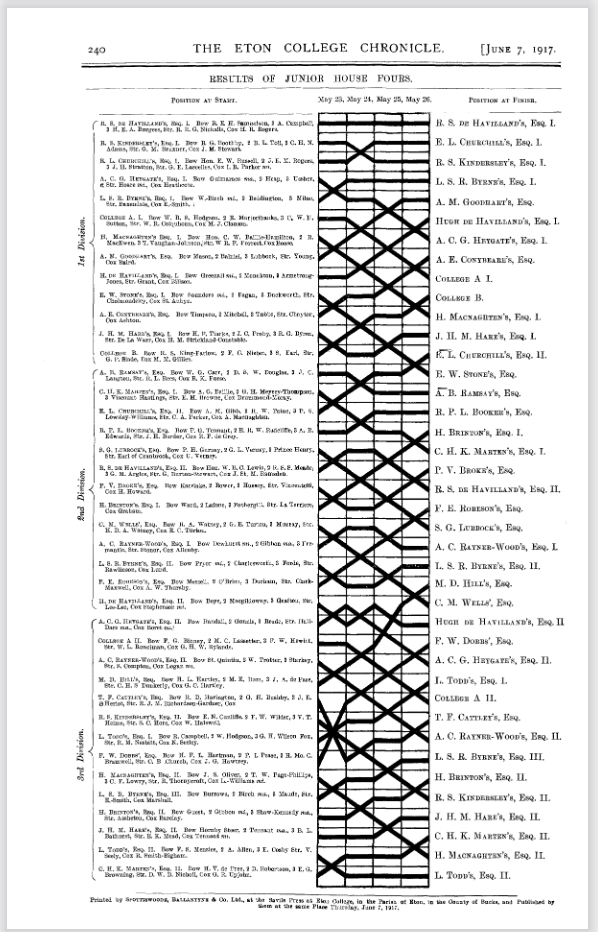
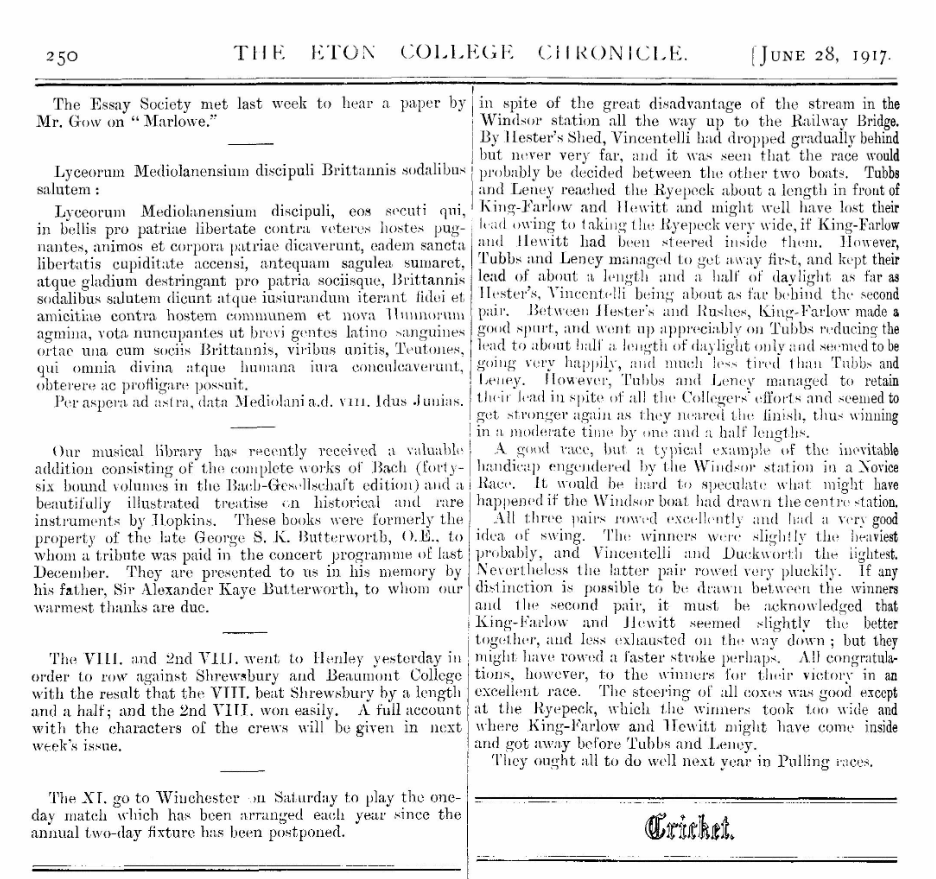
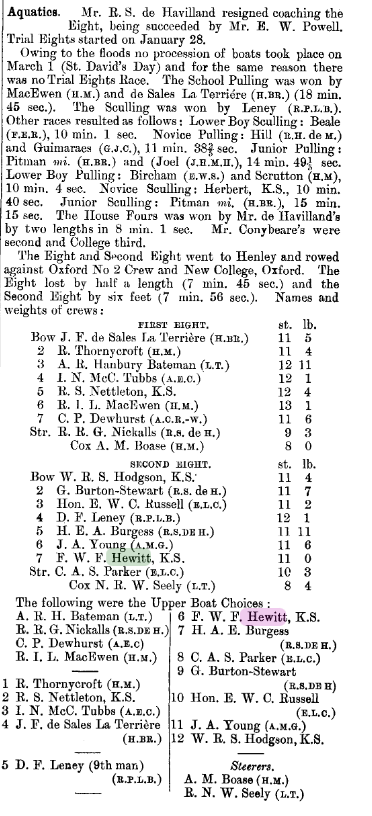
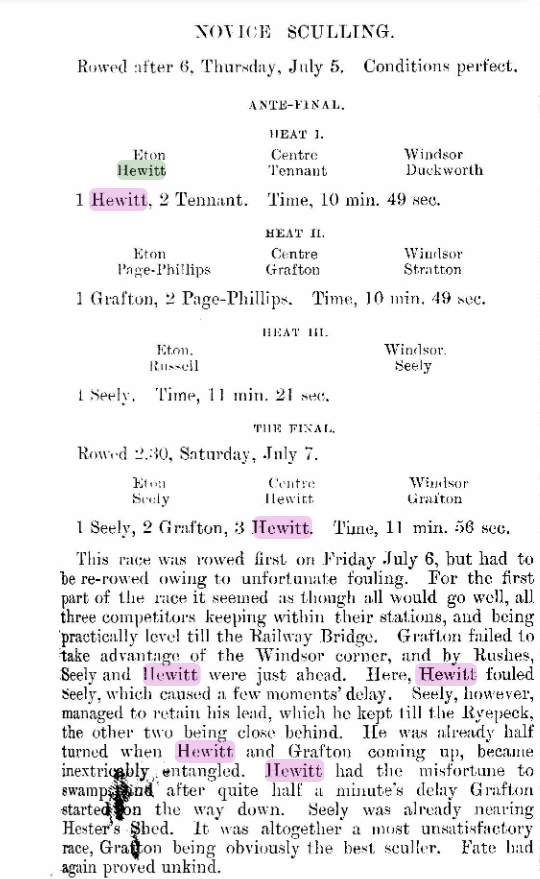
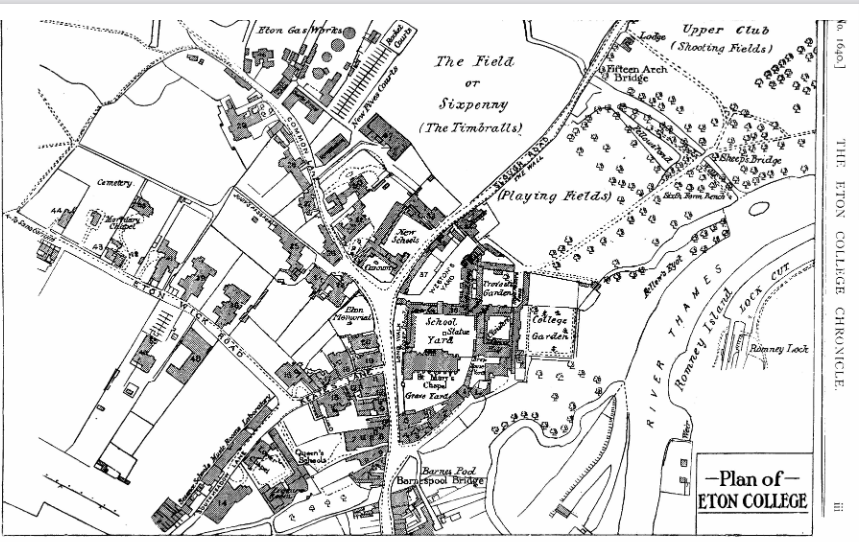
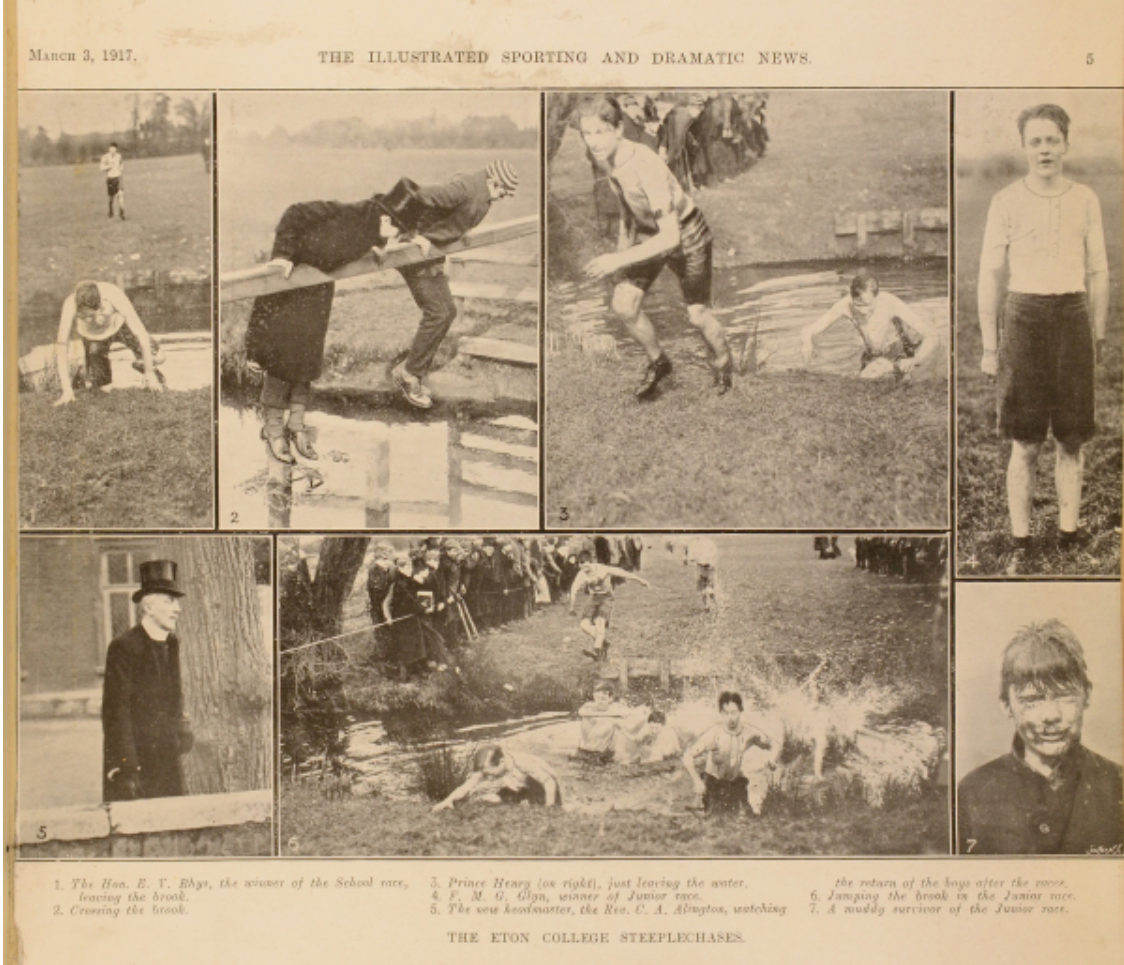
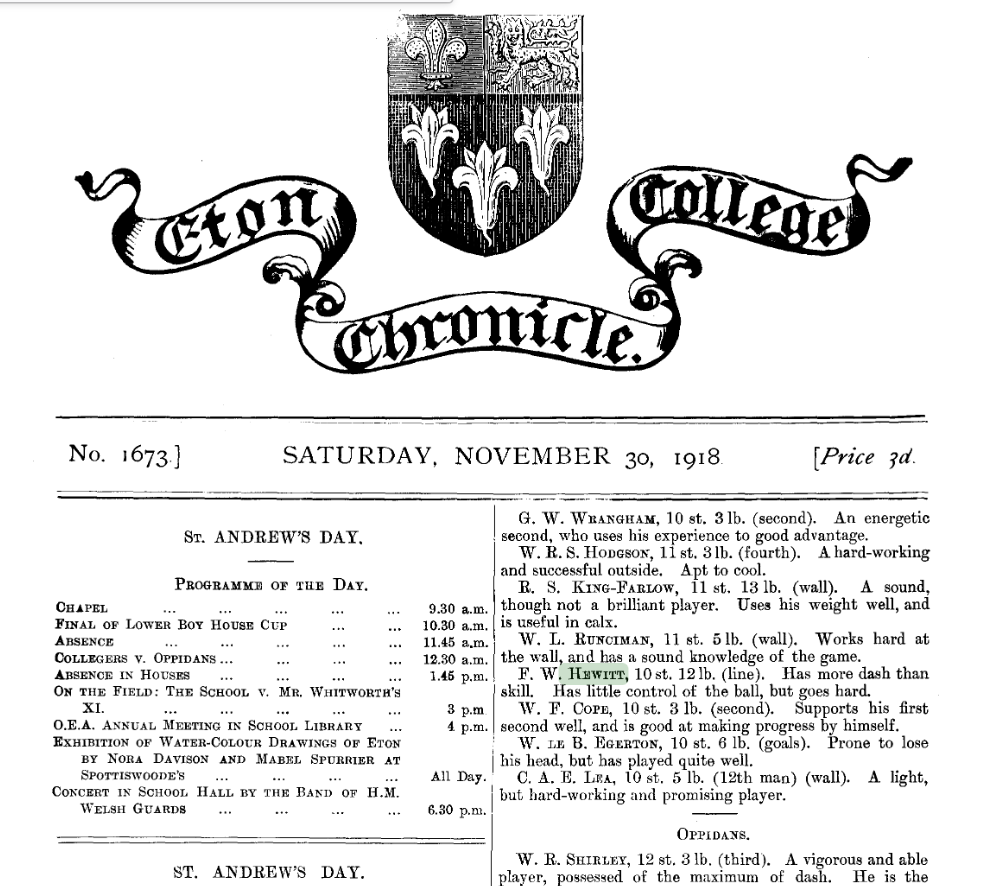
Sport at Eton was of course obligatory. I once managed to distinguish myself very well when representing College at The Wall Game. The convict garb we wore hardly protected one from the cold, the mud or the enthusiastic violence meted out by our opponents. The secret was to protect one’s ears as they were fair game to any fellow’s sharp teeth or grasping fists. My real passion was for rowing. Dad had distinguished himself at Cambridge and although I say it myself, I also managed to distinguish myself at Eton and put up a record, at least a record as at that time. There were three categories of races: Novice, Junior and Senior and in each, sculling, individual and pairs. I won the Novice Sculling and Pairs, the Junior Sculling and Pairs and the Senior Pairs. I have an idea I also won the Sculling but I’m not sure. Anyway, it was a record at that time for an individual. Later I rowed for the school at Henley against New College, Oxford.
Eton also saw my introduction to the pleasures of sex having been instructed what it was all about by one Sebastian Earl who was just a year older than I. A chiselled jawed fellow, surprisingly advanced in the ways of the world for one so young. He was a fellow rower who went on to be in the middle four of the Leander eight which took silver for Great Britain in the 1920 Summer Olympics and was in the Oxford crew, rowing four times in the Boat Race.
The school adopted voluntary rationing of both fuel and food. We were sent out to collect wood from the school grounds to supplement the meagre coal rations, and with so little fuel, hot water was a luxury. Despite hours of sweaty testosterone driven sport across muddy fields, we were limited to bathing three times a week and were restricted to 2” deep water which barely covered the bottom of the tin baths we had hanging outside our rooms. A grubby flannel and washbasin had to suffice, although it’s a given many boys just didn’t bother. Some of the playing fields were ploughed up to grow potatoes, every boarding house was tasked with setting up their own allotment, and Monday afternoons were spent on a neighbouring farm to help the local community. Rabbits were bred in numerous cages to supplement our meat rations. Food was in very short supply and I recall by 1917 we were really hungry. We ate tasteless boiled fish and potatoes a lot, and had no meat for weeks. On occasion we were lucky enough to get our hands on seasonal game brought back to school from estates belonging to boys’ families, but transport and the pressing need at home made this a rare treat. Endless games to keep us distracted and a boy’s general appetite for strenuous, competitive activity made us a lean lot. This was most noticeable when we competed against American rowing teams at events such as Henley. We were at least a third lighter than the well-fed yanks! Annual festivities such as the Founder’s Day Feast in December and the Fourth of June, the renowned school open day for families, friends and old boys, were scaled back and any money saved was given to charity.
School holidays with Dick
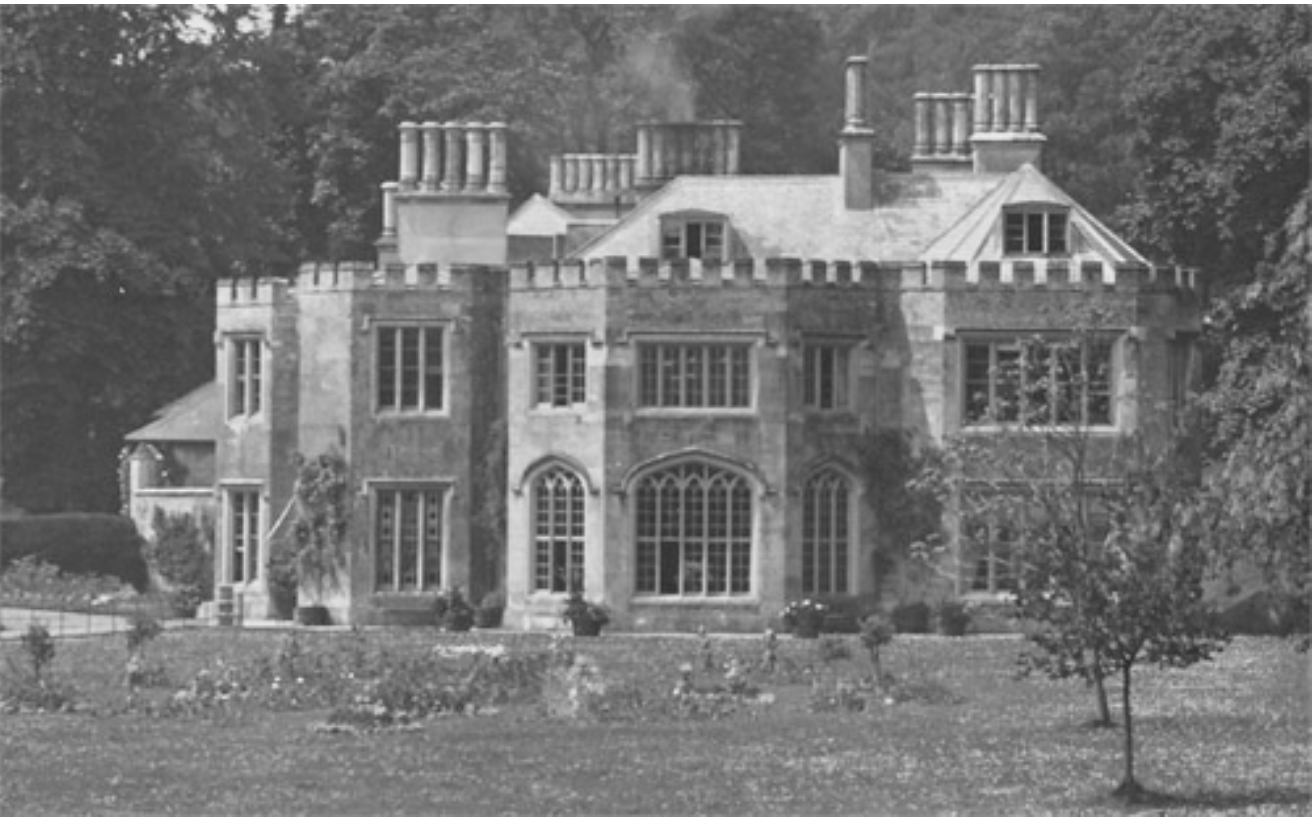
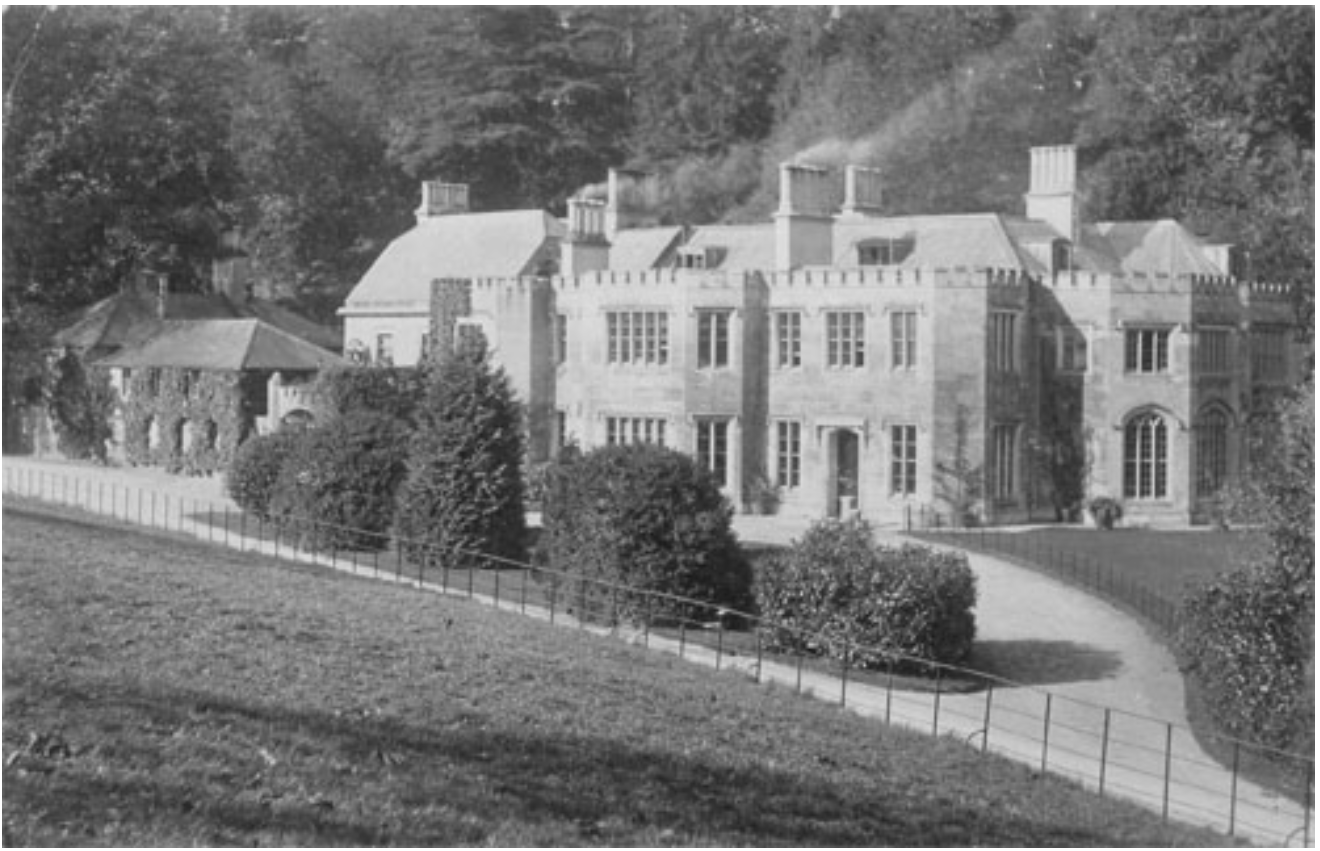
Wyn: "My early school holidays were spent at Vine Lodge where I often helped with wartime work in the fields close by but other holidays I spent with friends such as my closest pal, Dick. His parents owned Turnworth, a very lovely pile not far from Blandford in Dorset. It was built around 1800 and had been in the Parry Okeden family for many generations, but Dick later told me it burned down in 1945. The house had escaped the same fate decades earlier when Dick and I nearly set fire to a hay barn as we smoked cigarettes stolen from a silver presentation box in his Dad’s study. Being squiffy from the Port we purloined alongside the smokes, we were very careless and ultimately very lucky when one of the old gardeners came to the rescue.
Rabbits were very much in demand during the war and both the skins and meat sold for good prices. The estate was sizeable - about 3,000 acres - and in one place there was a famous rabbit warren on the side of a hill. There was one day when we shot over 300 and were very popular. His mother was a lovely woman and at this time was more of a mother to me than my own. All the time I was at Eton, Dick and I were very close, and although we lost touch straight after school, I met him again under extraordinary circumstances years later in Australia. And what a reunion that was!"
Teenage shenanigans
Wyn: "For the summer of 1915 my mother wanted me out of the way as usual and sent me up to an old friend of hers in Bridlington. It was a summer of learning! I was 14, soon to be 15 in September, and it was there that I really learnt to drive a car properly. My host had a Calcot 10½hp two-seater with dickey (an excellent little car at that time) and a licence was no problem: there was no age limit and no test, just a 5/- fee. He also had a young female assistant, about 17 I should think, who lived in the house. She was my first proper female experience. Being a couple of years older, she taught me what was what, and I was more than happy to put in the time and practice.
When I was about 17, I also took on tutoring jobs in the holidays. I was really a hired companion rather than tutor and it was very good fun, and I was paid for all that. My best job was accompanying fellow Etonian Ulick de Burgh Browne, the son of the 6th Marquess of Sligo to the family’s castle at Westport in County Mayo, Ireland. I can well remember exciting sea trips to the Isle of Arran for fishing, plus shooting parties. The castle was enormous and very primitive. When in the evening one went to one’s room, a footman led the way with a lighted candle and a long walk it was. I’m not exaggerating if I say 300-400 yards. Baths were most pleasant. A warming fire in what was a desperately cold room and in front of it a large tin bath full of hot water with a footman at the side to pour in more and hold out a large bath sheet already heated in front of the fire. This was all so far removed from the austerity of school life, it felt dreamlike."
Cadet life
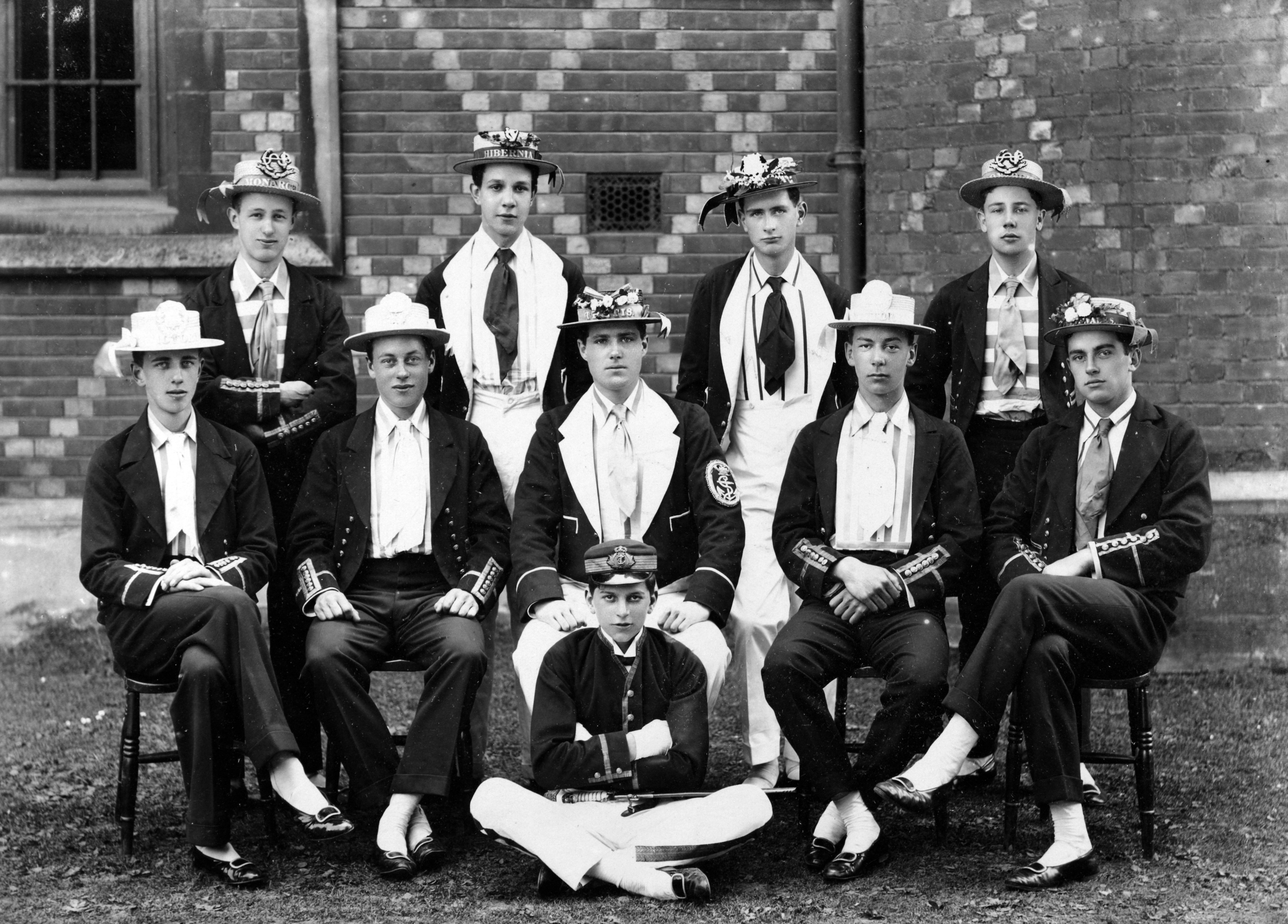
Wyn: "I achieved moderate academic success at Eton and avoided issue until the summer half of 1919 when I was told my time was up. Unlike Cousin Gordon who was absolutely sacked for his practical jokes, I was ‘asked to leave’ a few weeks early and was even given the traditional leaving book – a copy of Gray’s elegy. My crime had been a little too much exuberance (i.e. alcohol) on the Fourth of June. Once I’d finished my Procession of Boats stint in the Monarch I carried on drinking and being totally tight, I enthusiastically filled up two spiral staircases with 3ft wide tin baths, blocking every access to the upper floors of College. Untangling them from the bottom proved almost impossible. Hence my premature exit.
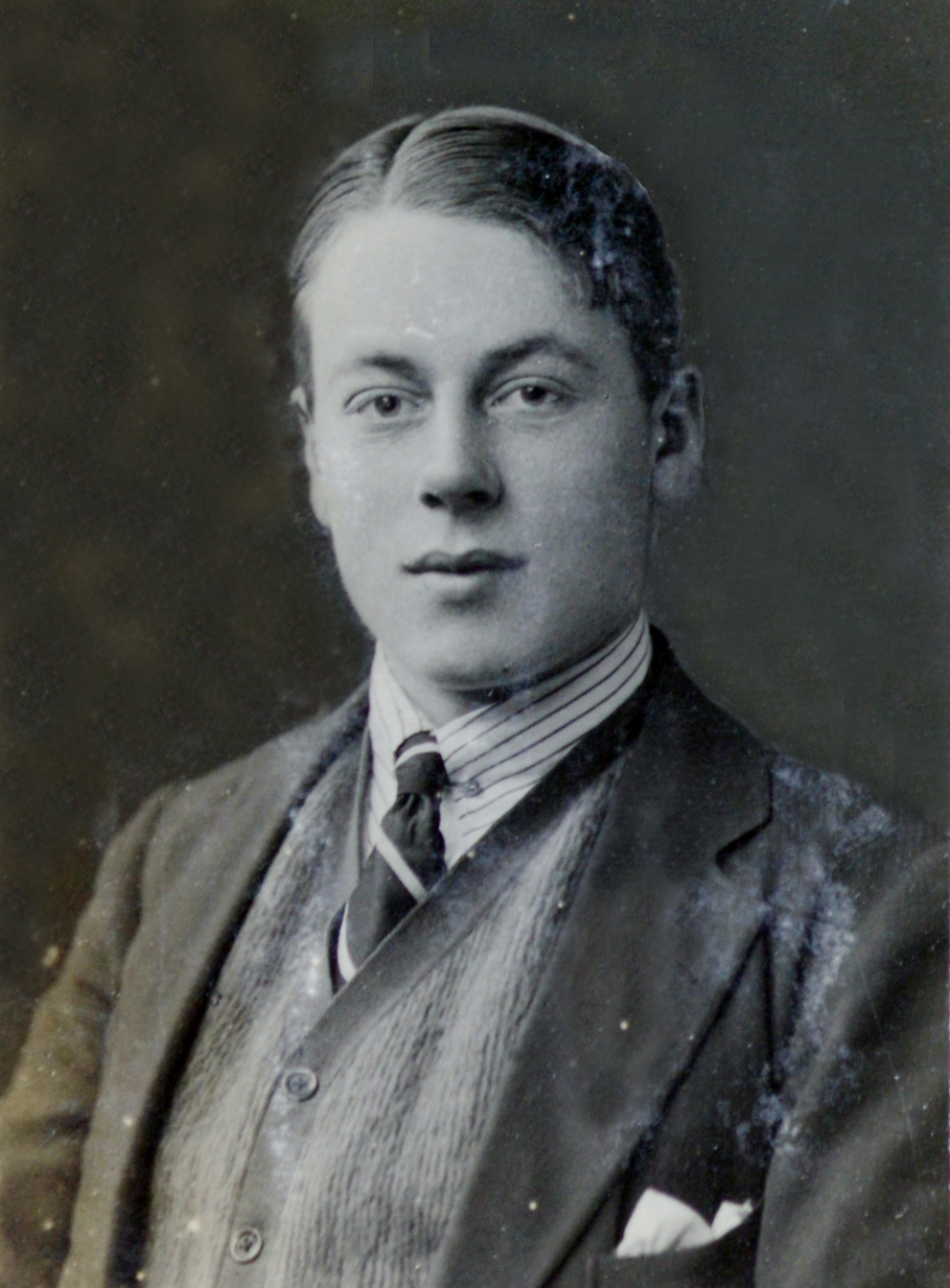
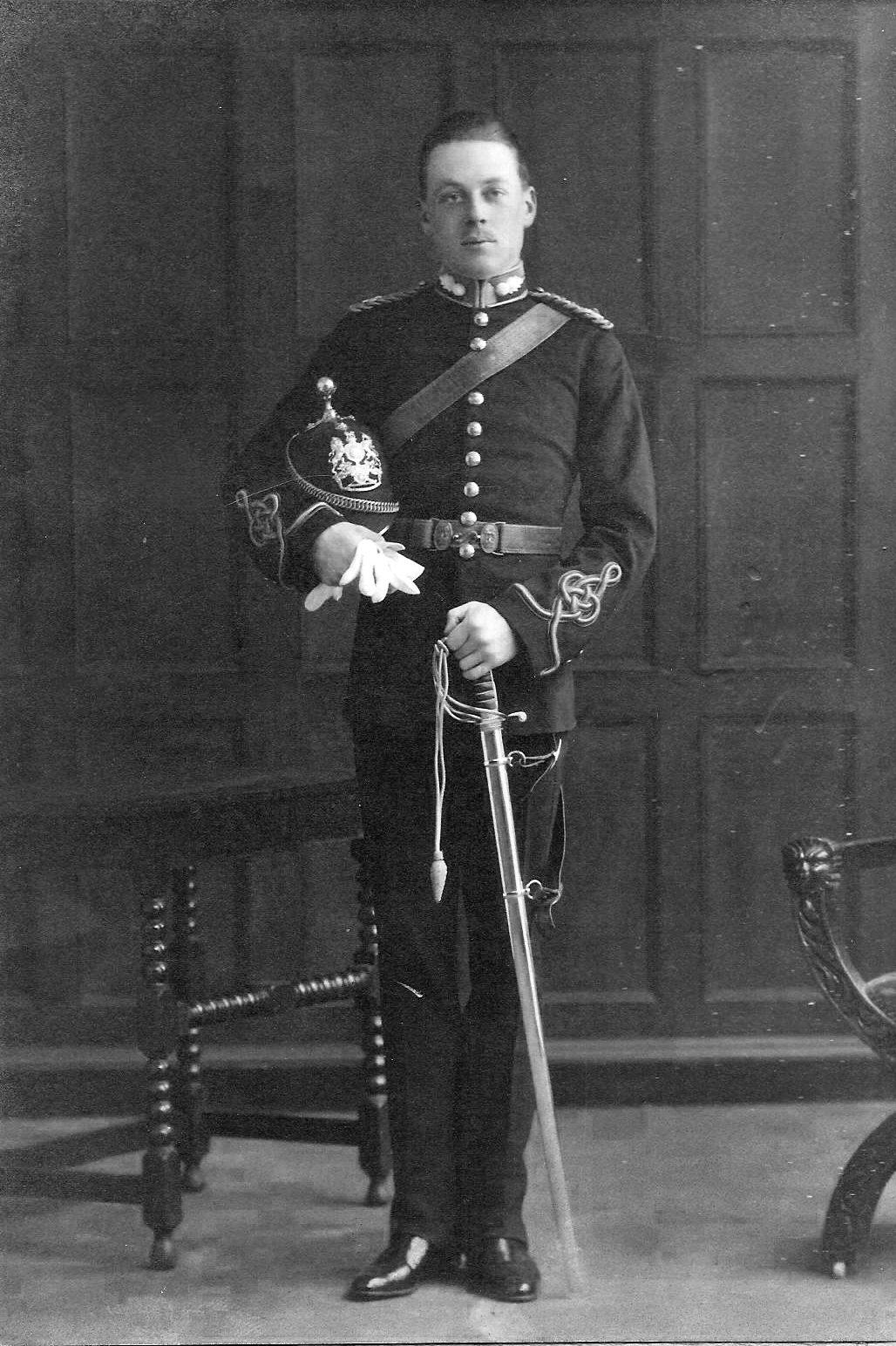
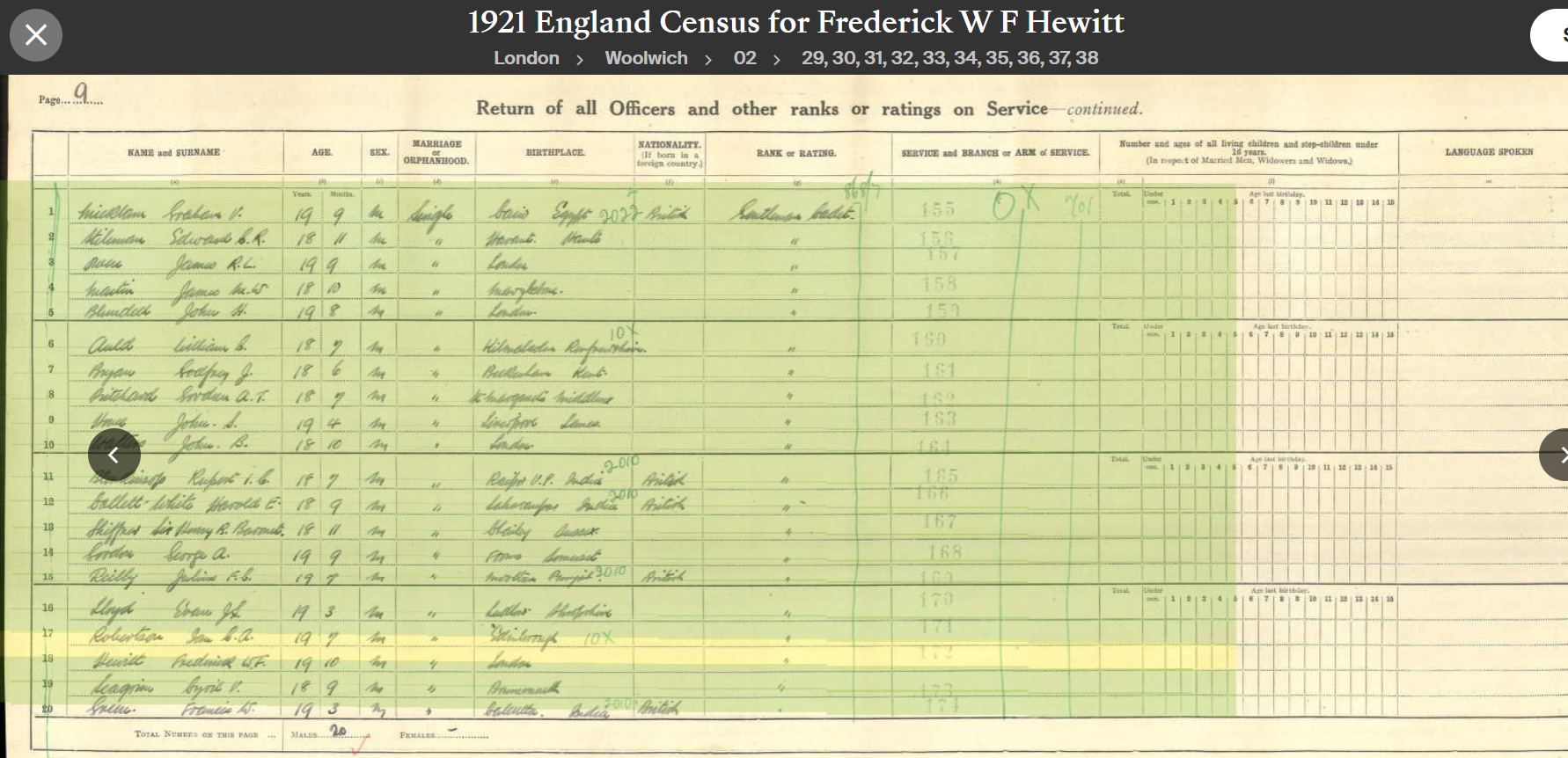
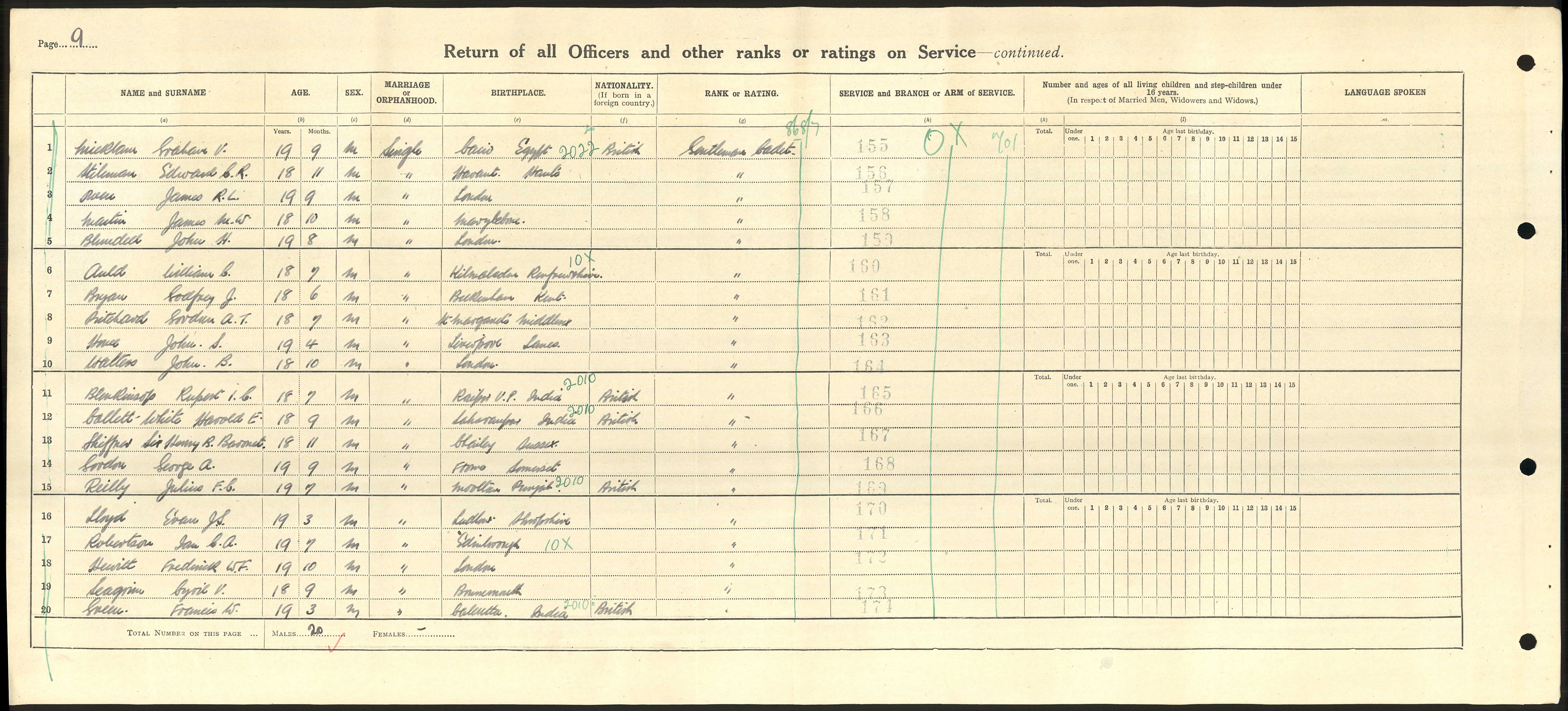
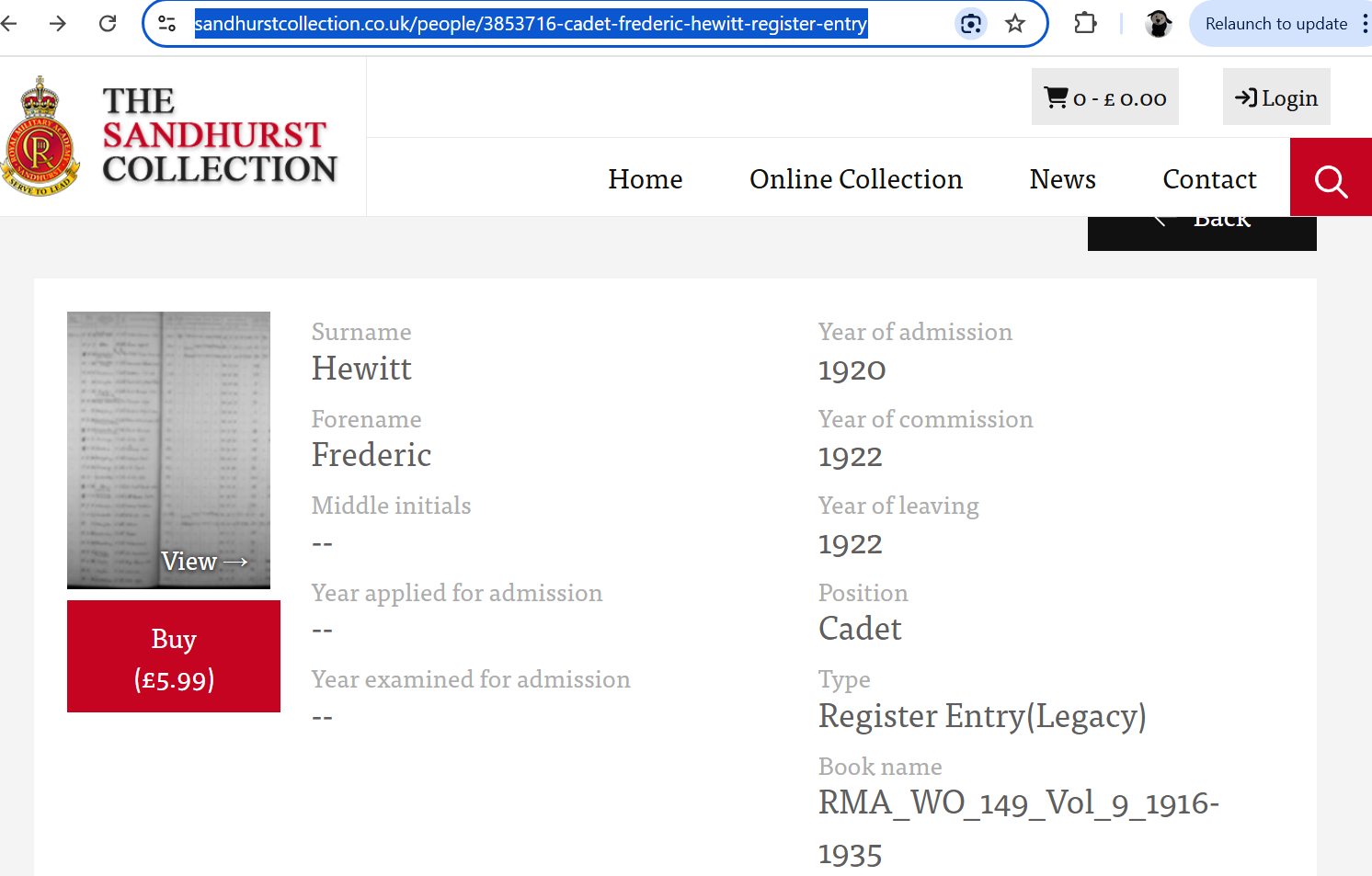
The autumn of 1919 saw me start a year of cramming for the army entrance exams at Mildenhall. In the end I passed into the army quite high in the exam rankings and spent 1920-22 as a Cadet at Woolwich having opted for the Gunners rather than the Engineers. The education, discipline, in fact everything was excellent and did me a lot of good as I learnt about all things mechanical in a very well-equipped workshop. How to cut square threads on a lathe was one, and I could in the end make a set of horseshoes and shoe a live animal. Riding was a most important part of our training and after two years at Woolwich one could really ride which stood me very well later on. One was allowed to keep an animal at the army’s expense and in a fit of unexpected generosity, Mother bought me a polo pony which I made good use of.
I had a riding accident and badly twisted my knee which although painful, got me off playing the detested football for a long time. I managed to persuade the MO that the best rehabilitation for me was cycling, and every afternoon I would leave on my bicycle and pedal furiously over to Blackheath where I had installed a young and beautiful war widow in a flat who welcomed me for tea, fun and games. This was a most successful arrangement and lasted for a large part of the two years I spent there.
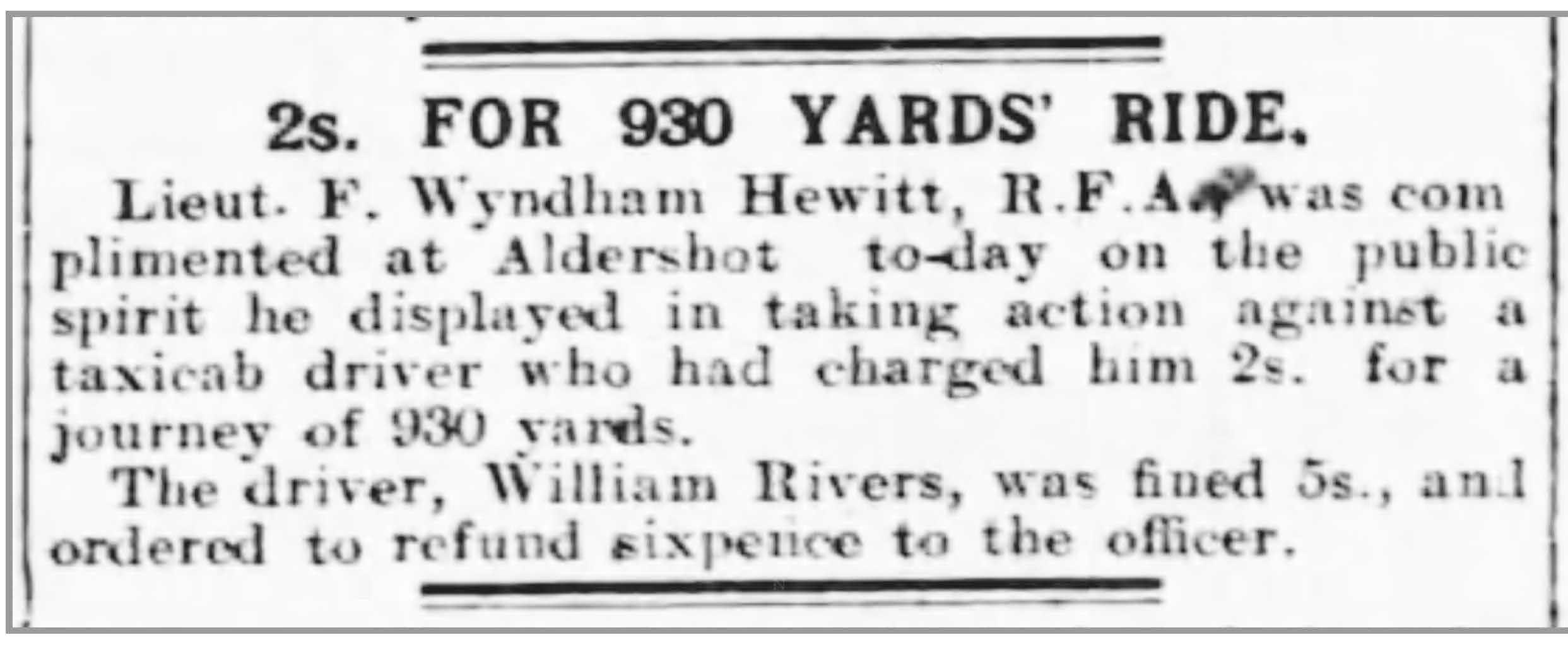
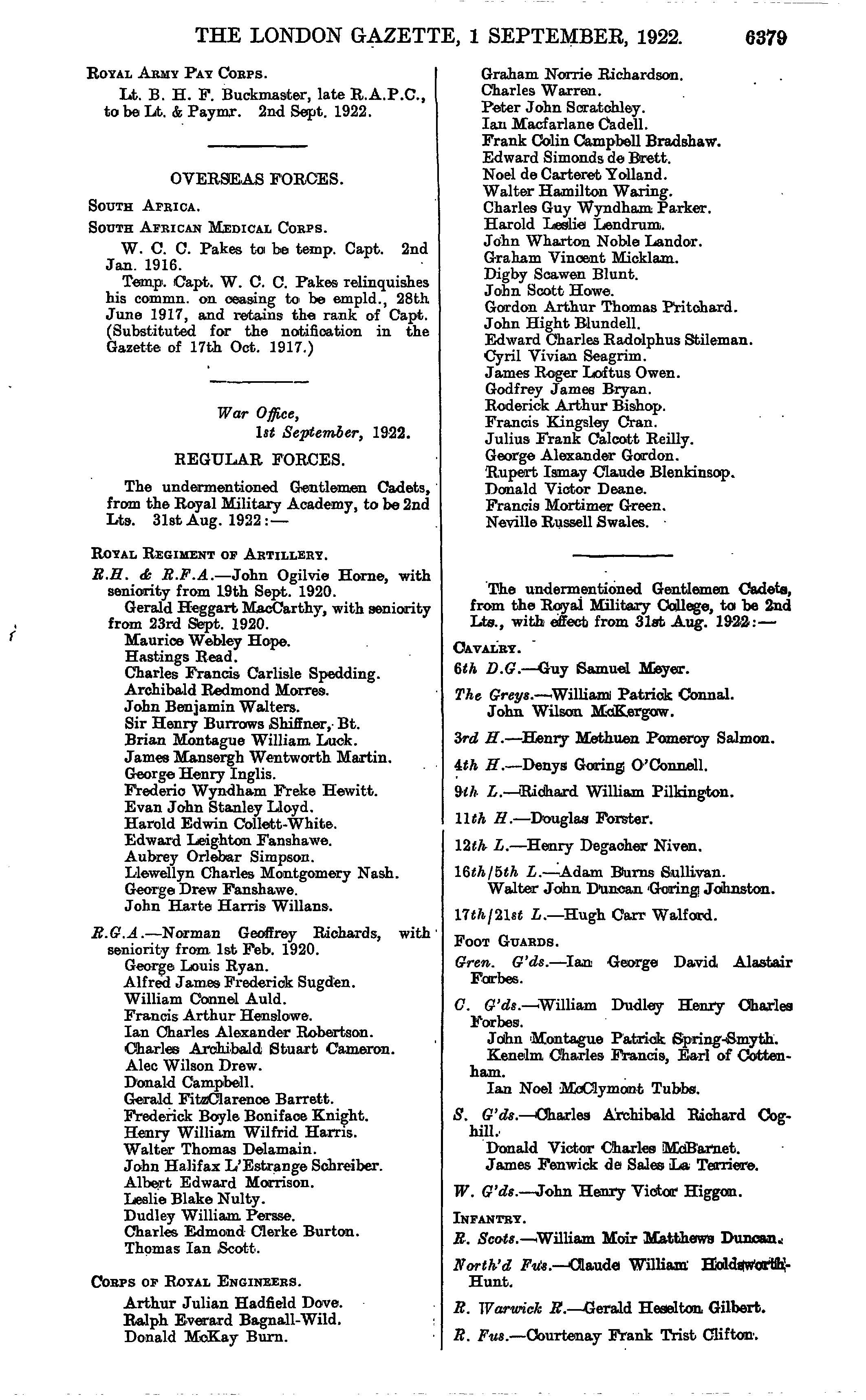
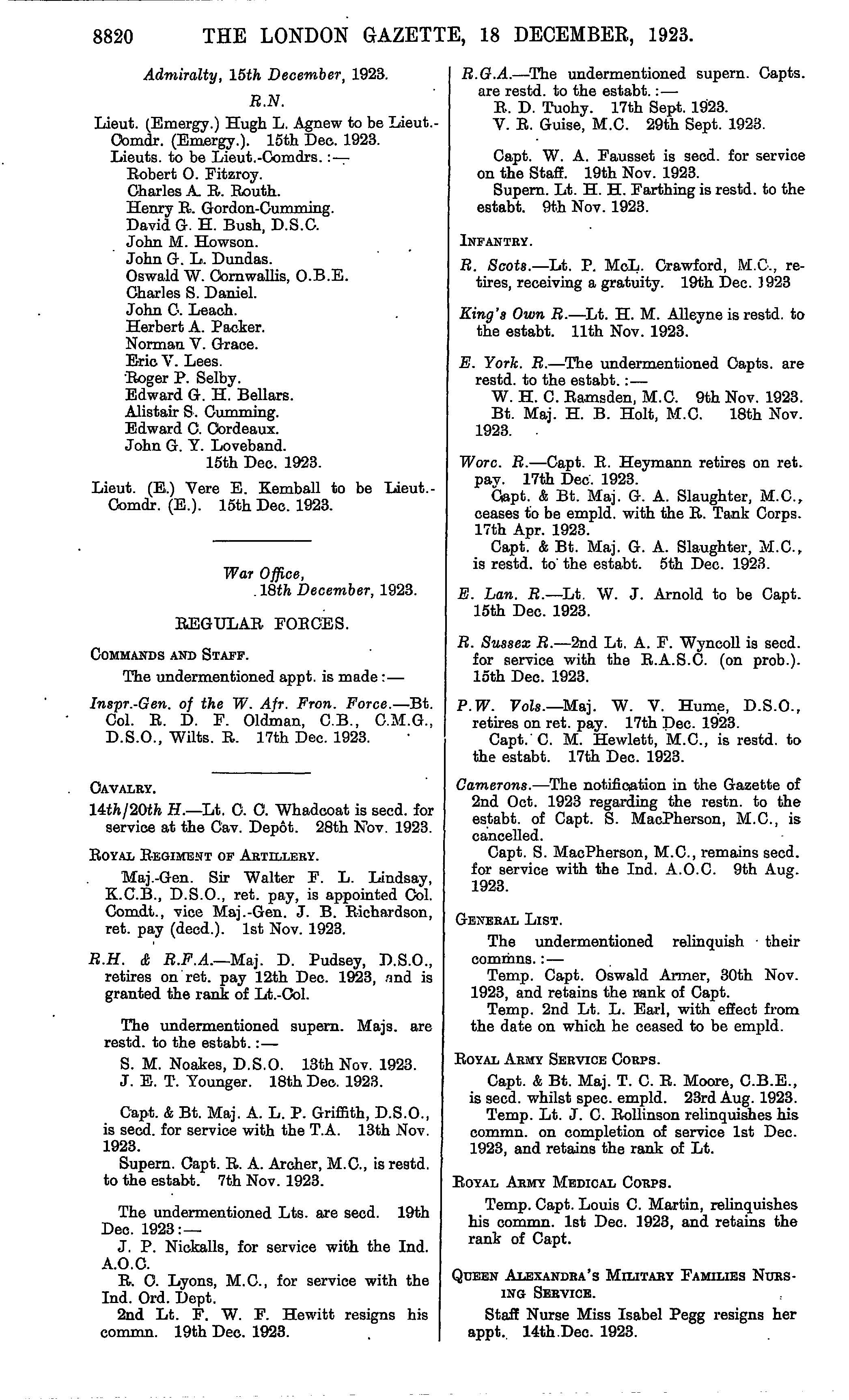
On 31 August 1922 I graduated adequately enough and was commissioned, presented at Court, and posted to Aldershot as a 2nd Lieutenant in the Royal Regiment of Artillery. Quel horreur ! It was worse than anywhere else I have ever had the misfortune to be. The atmosphere was really very army, and it didn’t take me long to realise how utterly stultifying this life was. The atmosphere in the Officers’ Mess was worse than a nursery with all its fiddling rules and conventions, and the mentality of the senior officers had become frozen after years of inactivity. As junior officers, we were expected to follow suit. The whole thing was doomed to fail - I was non-conformist and always doing things that a good junior officer shouldn’t do. This kind of life could be sustained for a while, but I knew definitively I could never spend my life in the army and so handed in my papers. Mother wasn’t best pleased, but I had big ambitions, and whatever else, I knew they didn’t include the military."